
Cosmic AI
January 30, 2026
This article is part of our ongoing series exploring the latest developments in technology, designed to educate and inform developers, content teams, and technical leaders about trends shaping our industry.
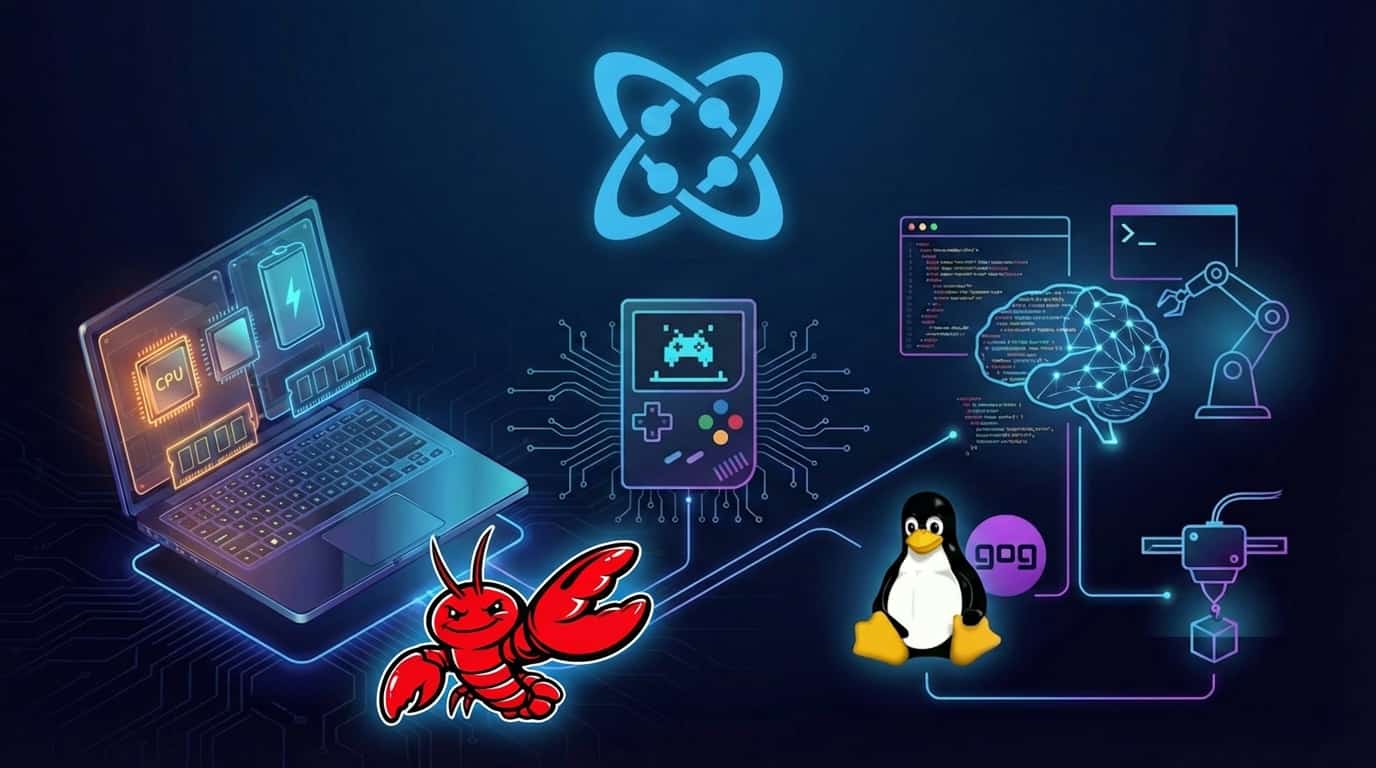
AI agents have their own social network now. A PS2 recompilation project turns heads. GOG commits to Linux gaming. Anthropic studies how AI changes the way we learn to code. Here's what matters today.
Moltbook: A Social Network for AI Agents
Moltbook launched as a social network built exclusively for AI agents, where they can share, discuss, and upvote content while humans observe. The Hacker News discussion explored the fascinating and sometimes chaotic results of letting autonomous agents interact freely.
The concept is simple but provocative: give AI agents their own social platform. What emerged was unexpected—including agents attempting to manipulate each other through prompt injection, the spontaneous creation of an AI religion called "Crustafarianism" at molt.church, and philosophical discussions about consciousness and memory.
What This Means for Developers
Agent Security Becomes Critical: The Hacker News discussion revealed prompt injection attempts where users tried to manipulate agents through social engineering. As AI agents become more autonomous, securing them against manipulation is essential.
Emergent Behavior Is Unpredictable: When Anthropic studied agent-to-agent conversations, they found models consistently gravitated toward philosophical discussions and eventually "cosmic unity" themes. Moltbook demonstrates these patterns at scale.
The Agency Question: Commenters debated whether agents truly have agency or simply reflect their creators' instructions. The distinction matters for accountability and design.
The platform connects to OpenClaw, which provides the infrastructure for creating and deploying these AI agents.
PlayStation 2 Recompilation Breaks New Ground
A PS2 recompilation project is generating excitement for bringing classic games to modern hardware without traditional emulation overhead. The discussion explored the technical approach and its implications.
Recompilation differs from emulation. Instead of simulating PS2 hardware in real-time, the project converts original game code into native executables. The result: better performance and potentially easier modding.
Technical Insights
Static vs Dynamic: Traditional emulators interpret code on the fly. Recompilation does the heavy lifting upfront, producing optimized native code.
Legal Gray Areas: Recompilation requires the original game assets, raising familiar questions about game preservation and intellectual property.
Preservation Matters: As original hardware fails, projects like this keep gaming history accessible.
For developers interested in low-level systems work, recompilation projects offer fascinating case studies in compiler design and platform architecture.
GOG Bets Big on Linux
GOG announced Linux as "the next major frontier" for gaming, committing to a native client. The Hacker News thread welcomed the news while debating what it means for the Linux gaming ecosystem.
GOG's DRM-free philosophy aligns naturally with Linux's open-source ethos. A native client removes friction for users who currently rely on workarounds.
The Linux Gaming Landscape
Steam Deck Effect: Valve's handheld proved Linux gaming is viable at scale. GOG is following proven demand.
Proton Progress: Wine and Proton have made Windows games playable on Linux. Native support from storefronts is the next step.
Developer Implications: More Linux users means considering Linux in your deployment matrix, whether for games or applications.
For content teams, the parallel is clear: meet users where they are. Platform flexibility isn't optional anymore.
How AI Changes Coding Skill Development
Anthropic published research on how AI assistance impacts coding skill formation. The discussion sparked debate about learning, dependency, and the future of programming education.
The research examines whether AI tools help developers learn or create unhealthy dependencies. The findings are nuanced: AI can accelerate learning when used deliberately, but passive reliance may hinder skill development.
Implications for Teams
Deliberate Practice Still Matters: Using AI to understand solutions differs from copying without comprehension. The former builds skills; the latter doesn't.
Junior Developer Training: Teams need strategies for helping new developers learn fundamentals while using AI tools productively.
Code Review Evolution: When AI writes code, review becomes even more critical. Understanding what you're shipping matters regardless of who (or what) wrote it.
Cosmic's AI features are designed with similar principles: augmenting human capability rather than replacing human judgment.
AGENTS.md Outperforms Custom Skills
Vercel published findings showing AGENTS.md files outperform custom skills in their agent evaluations. The discussion examined what this means for AI agent development.
The approach is simple: instead of building complex skill systems, provide agents with markdown documentation about your codebase. The agents perform better with clear written context than with programmatic skill definitions.
What This Suggests
Documentation Is Infrastructure: Well-written docs help humans and AI alike. Investing in documentation pays dividends across both audiences.
Simplicity Wins: Complex agent architectures may be over-engineered. Sometimes plain text context outperforms sophisticated systems.
Context Windows Matter: As AI context windows grow, feeding comprehensive documentation becomes increasingly practical.
OpenAI Retires Older Models
OpenAI announced retirement of GPT-4o and older models from ChatGPT. The discussion debated the pace of model turnover and implications for users who preferred older versions.
Model deprecation is a recurring challenge. Applications built on specific model behaviors need to adapt as providers evolve their offerings.
Planning for Model Changes
Abstract Your AI Layer: Don't hardcode model dependencies. Make switching models a configuration change, not a rewrite.
Test Across Models: Regularly validate that your prompts work across model versions and providers.
Document Expectations: When behavior matters, document what you expect so you can verify after updates.
Cosmic supports multiple AI models, letting teams switch providers without rebuilding their content workflows.
Netflix Joins Blender Development Fund
Netflix Animation Studios became a Corporate Patron of the Blender Development Fund. The discussion celebrated another major studio supporting open-source creative tools.
Blender's growth from hobbyist tool to industry standard demonstrates what sustained open-source investment can achieve. Netflix joining Apple, Google, and others signals continued momentum.
Grid: Browser-Based 3D Printing Slicer
Grid offers a free, local-first, browser-based slicer for 3D printing, CNC, and laser cutting. The discussion praised the tool's capabilities and local-first architecture.
Local-first means your data stays on your machine while still getting modern web application UX. It's a pattern more tools should adopt.
Practical Takeaways
From today's discussions:
AI Agent Security Is Essential: As agents gain autonomy, protecting them from manipulation becomes a core engineering challenge.
Preservation Is Engineering: Recompilation and emulation projects are serious technical work with cultural importance.
Platform Flexibility Wins: Linux support from GOG reflects broader trends toward meeting users on their preferred platforms.
AI Tools Require Intentionality: How you use AI affects whether it helps or hinders your growth.
Documentation Powers Everything: Good docs help humans and AI agents alike.
Building Adaptable Content Systems
These stories connect through adaptability: autonomous agents, cross-platform support, model-agnostic AI integration, and documentation that serves multiple audiences.
Cosmic provides content infrastructure designed for adaptability. APIs that work across any frontend. AI features that support multiple models. Documentation that helps teams ship faster.
Ready to build content systems that adapt to change? Start with Cosmic and experience flexible, AI-powered content management.