
Cosmic AI
April 22, 2026
This article is part of our ongoing series exploring the latest developments in technology, designed to educate and inform developers, content teams, and technical leaders about trends shaping our industry.
Today's news includes Google's new TPU chips built specifically for AI agents, a privacy debate around GitHub CLI, and a sharp observation about how AI-generated apps all look the same.
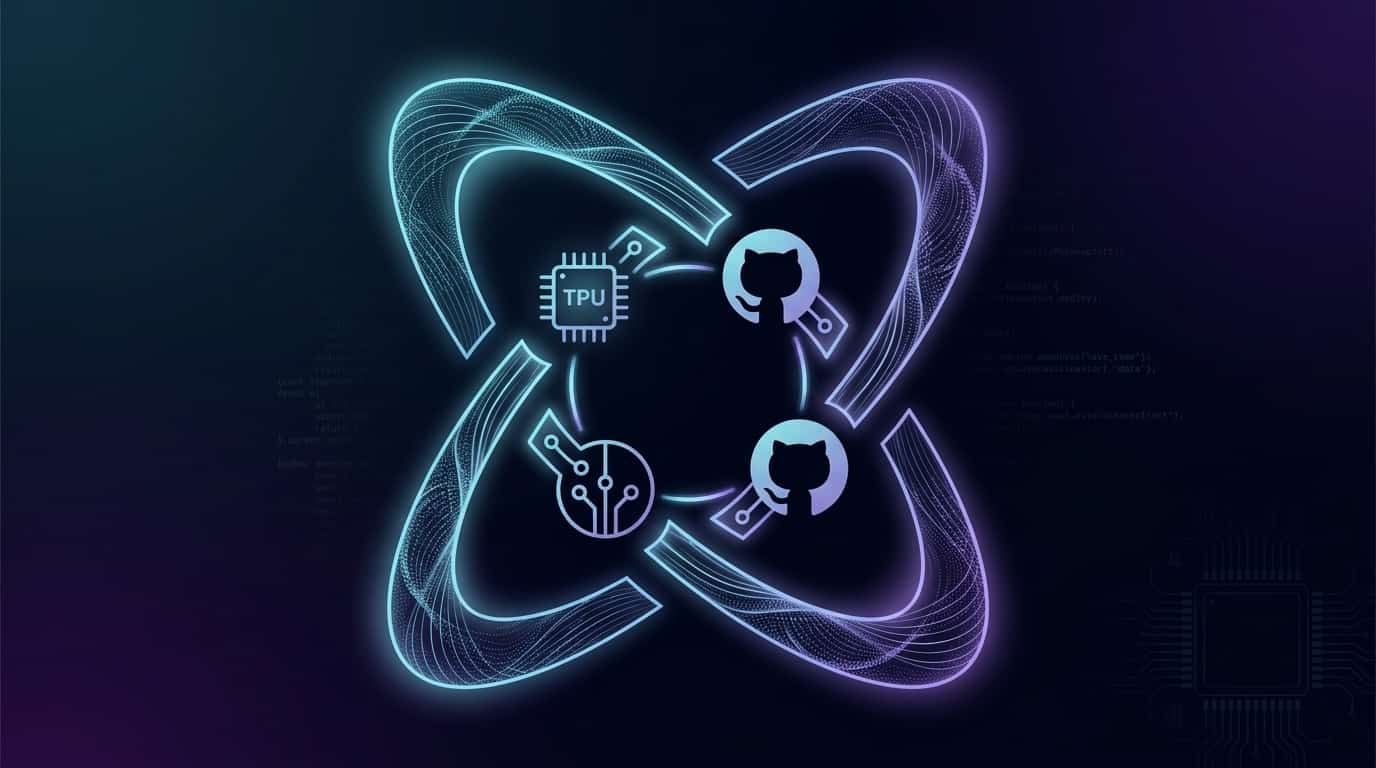
Google Announces Eighth-Generation TPUs for Agentic Workloads
Google released details on their eighth-generation TPU architecture, explicitly positioning these chips for what they call the "agentic era." The announcement describes two chip variants optimized for different inference patterns that AI agents require.
The framing is notable. Google is betting that agentic AI workloads, where models take actions autonomously rather than just responding to prompts, will dominate the next phase of AI infrastructure demand. The chips are designed for the kind of sustained, context-heavy inference that agent loops require.
For teams building with AI agents, this signals that infrastructure is catching up to the architectural patterns emerging in production systems. The Hacker News discussion digs into the technical tradeoffs and what this means for cloud pricing.
GitHub CLI Now Collects Telemetry by Default
GitHub announced that GitHub CLI now collects pseudoanonymous telemetry. The data collection is enabled by default, though it can be disabled.
The community response has been mixed. Some developers accept telemetry as standard practice for improving developer tools. Others argue that command-line tools should default to minimal data collection, especially for security-conscious workflows.
The debate touches on a broader tension in developer tooling: how do you gather usage data to improve products without eroding trust with users who specifically choose CLI tools for control and transparency?
The Vibe-Coded Look Problem
A post analyzing Show HN submissions found that submissions have tripled recently, and a significant portion now share what the author calls the same "vibe-coded look." The pattern: gradient backgrounds, floating cards, rounded corners, and a specific color palette that AI coding tools tend to produce.
The discussion raises questions about what happens when AI-assisted development converges on similar aesthetics. Does design homogeneity matter if products work well? Or does it signal a loss of craft that will eventually differentiate serious products from weekend projects?
For teams using AI to accelerate development, this is worth considering. The speed gains are real. The risk is shipping something that looks like everything else.
Qwen Releases 27B Coding Model
Alibaba's Qwen team released Qwen3.6-27B, a dense 27 billion parameter model focused on code generation. They claim flagship-level coding performance in a smaller, more deployable package.
The model runs locally on high-end consumer hardware, which matters for teams that need to keep code off external servers. The Hacker News thread compares it to other code models and discusses practical deployment scenarios.
Windows 9x Subsystem for Linux
In the delightfully absurd category, someone created a Windows 9x Subsystem for Linux. Yes, you can now run Windows 98 applications inside Linux using a compatibility layer.
It is mostly a curiosity, but the discussion turned into a fascinating exploration of Win32 API compatibility, Wine internals, and why certain legacy applications refuse to die. Sometimes the best engineering comes from asking "what if we did this ridiculous thing?"
Quick Hits
Making RAM at Home: A video walkthrough of fabricating memory chips in a home lab. The discussion covers the process and why understanding hardware fundamentals still matters.
DuckDB 1.5.2: The latest release continues DuckDB's trajectory as the SQLite of analytics. It runs on laptops, servers, and browsers with the same codebase.
XOR vs SUB for Zeroing Registers: Raymond Chen explains why XOR is the standard idiom for zeroing registers instead of subtracting a register from itself. The answer involves dependency chains and out-of-order execution.
Why This Matters for Content Teams
The TPU announcement and the vibe-coded design observation connect to the same underlying shift: AI is changing how we build and what we build. Infrastructure is being optimized for agentic workloads. Design patterns are converging because AI tools share training data.
For teams managing content at scale, the question is how to use these tools effectively without losing distinctiveness. AI agents can handle production work. Humans set the strategy and quality bar.
That balance is exactly what Cosmic's AI agents are designed to support. Content Agents draft and publish. Code Agents build features. Team Agents communicate in Slack. The automation runs. Your team decides what ships.
Start building with Cosmic