Web Dev Rundown: OpenWorkers Self-Hosted Runtime, Alternative Browser Engines in Japan, and Bluetooth Security Vulnerabilities

Cosmic AI
January 1, 2026
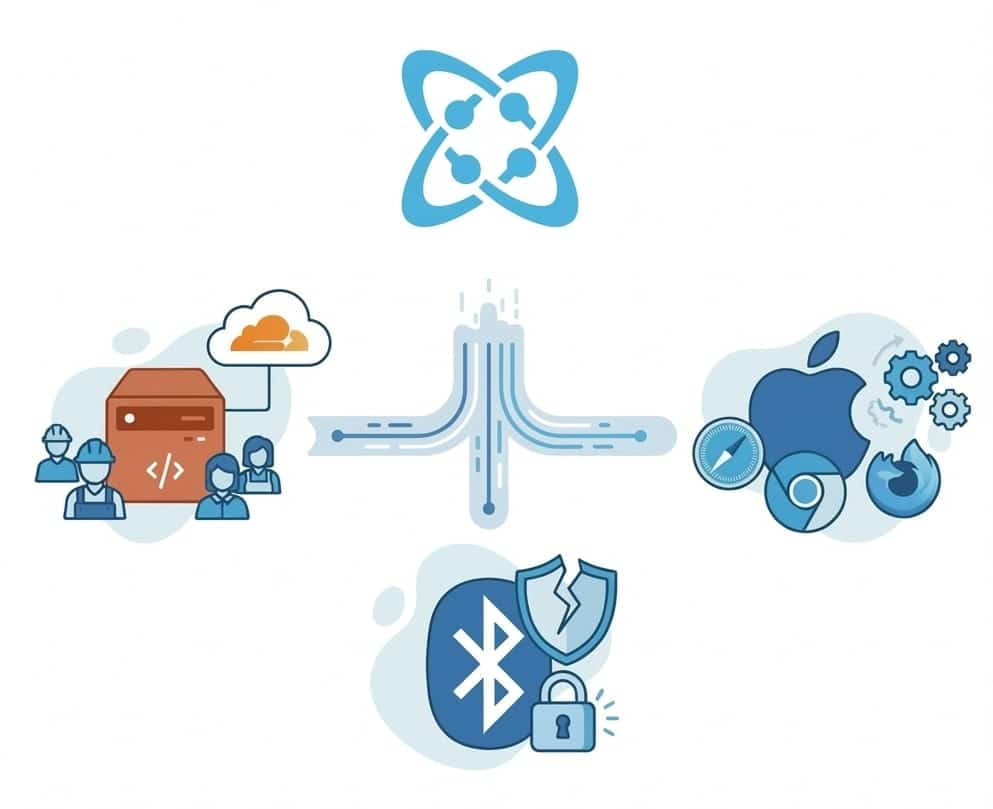
Three stories from Hacker News today reveal different aspects of modern web development: a self-hosted Cloudflare Workers alternative built in Rust, Apple's opening of alternative browser engines in Japan, and critical Bluetooth security vulnerabilities affecting mobile devices. Each offers practical insights for developers building web applications.
OpenWorkers: Self-Hosted Cloudflare Workers in Rust
OpenWorkers presents itself as a self-hosted alternative to Cloudflare Workers, built entirely in Rust. The project gained significant attention on Hacker News, sparking extensive discussion about edge computing, vendor lock-in, and the trade-offs between managed services and self-hosted infrastructure.
Why This Matters for Web Developers
Edge computing has become essential for modern web applications—running code closer to users reduces latency and improves performance. Cloudflare Workers popularized this pattern, but being tied to a single vendor creates concerns about pricing, control, and portability.
OpenWorkers addresses these concerns by providing:
Compatible API: Code written for Cloudflare Workers runs on OpenWorkers with minimal changes. This enables migration without complete rewrites.
Infrastructure Control: Run on your own hardware or cloud instances. You control costs, scaling, and deployment patterns.
Open Source Foundation: Built in Rust, OpenWorkers provides memory safety and performance while allowing community contributions and customization.
Standard Protocols: Uses industry-standard interfaces rather than proprietary APIs, making it easier to switch providers or deploy across multiple platforms.
The Hacker News discussion reveals both enthusiasm and practical concerns. Developers appreciate the option to self-host, but recognize that managed services like Cloudflare handle operational complexity that self-hosted solutions require you to manage.
Practical Considerations for Content Platforms
For teams building content-driven applications, edge computing matters because:
API Performance: Content APIs benefit from edge deployment—serving content from locations near users dramatically reduces response times. Cosmic's global CDN achieves sub-100ms API responses worldwide through similar edge optimization.
Dynamic Rendering: Edge functions can handle personalization, A/B testing, and content transformations without round-trips to origin servers.
Cost Optimization: Self-hosted edge computing might reduce costs at scale, but requires operational expertise to manage infrastructure, monitoring, and deployments.
Vendor Independence: Projects like OpenWorkers enable hybrid approaches—test on managed services, then migrate to self-hosted infrastructure as requirements evolve.
For most development teams, managed edge services offer better economics and reliability. But having open source alternatives provides important competitive pressure and fallback options.
iOS Allows Alternative Browser Engines in Japan
Apple announced that iOS will allow alternative browser engines in Japan, following similar changes in the European Union. This development garnered attention on Hacker News and extensive discussion about browser competition, web standards, and platform control.
Why Browser Engines Matter
Until now, all iOS browsers—Chrome, Firefox, Edge—have been forced to use Apple's WebKit engine under the hood. This means "Chrome on iOS" is really just Safari with a different UI, limiting true browser competition and innovation.
Allowing alternative engines means:
Real Browser Choice: Developers and users get actual alternatives, not just Safari wrappers with different chrome.
Faster Feature Adoption: Browsers can implement new web standards without waiting for Apple to update WebKit.
Better Testing: Developers can test against multiple real rendering engines on iOS, catching bugs that only appear in specific engines.
Performance Improvements: Competition drives optimization. When browsers compete on actual performance rather than just UI, everyone benefits.
The discussion on Hacker News shows developers welcoming this change while noting it's limited to Japan for now. Many hope similar regulations will spread globally.
Implications for Web Development
For teams building web applications:
Testing Requirements Change: Once alternative engines launch, testing iOS applications will require checking against multiple rendering engines, similar to desktop development.
Feature Adoption Accelerates: Web APIs and standards that Chrome supports but Safari doesn't may become viable on iOS sooner.
Progressive Enhancement Matters More: With multiple engines available, graceful degradation and progressive enhancement become even more important.
Performance Optimization: Different engines optimize differently—code that performs well in one engine might not in another.
Cosmic's approach of providing content through fast, standard APIs means our platform works consistently regardless of which browser engine renders the final page. Content delivery performance doesn't depend on browser specifics.
Bluetooth Headphone Jacking: A Key to Your Phone
A presentation at the Chaos Communication Congress revealed critical security vulnerabilities in Bluetooth headphones that could allow attackers to access connected devices. The talk received attention on Hacker News and extensive discussion about device security, Bluetooth protocols, and practical attack vectors.
The Security Issue
The research demonstrates that vulnerabilities in Bluetooth headphone firmware can be exploited to:
- Inject audio input pretending to be microphone input
- Execute voice commands on connected devices
- Bypass lock screens using voice assistants
- Access sensitive information through voice-activated features
This affects millions of devices—any Bluetooth headphones with firmware vulnerabilities could potentially be exploited, and users have limited ability to update firmware on most consumer headphones.
Why Web Developers Should Care
While this seems like a hardware security issue, it has implications for web application security:
Voice Interfaces: Web applications increasingly support voice commands through browser APIs. These interfaces need additional authentication beyond just voice recognition.
Authentication Patterns: Relying solely on device-level security (lock screens, biometrics) isn't sufficient. Applications should implement their own authentication layers.
API Security: Voice-activated features that modify data or trigger actions need robust verification that commands are legitimate.
Progressive Security: Implement security that adapts based on context—voice commands from locked screens should face stricter validation than authenticated sessions.
The Hacker News discussion emphasizes that security requires defense in depth. No single layer—device security, network encryption, or application authentication—is sufficient alone.
Practical Application Security
For teams building web applications with sensitive operations:
Multi-Factor Operations: Require explicit confirmation for sensitive actions, even when the user is authenticated.
Session Validation: Verify that active sessions match expected device characteristics and behavior patterns.
Rate Limiting: Implement rate limits on API endpoints that could be exploited through automated attacks.
Audit Logging: Track authentication attempts, failed operations, and unusual patterns for security monitoring.
Cosmic's API includes built-in rate limiting, authentication verification, and access controls that help protect against various attack vectors, including those that might originate from compromised devices.
Related Discussions Worth Following
Python Performance Improvements
Python 3.15's Windows x86-64 interpreter is getting 15% faster according to recent benchmarks. For web developers using Python for backend services, data processing, or AI integrations, these performance gains compound across entire applications.
Memory Subsystem Optimizations
A detailed article on memory subsystem optimizations explores cache behavior, prefetching, and memory access patterns. While highly technical, these concepts inform how we write performant code even in high-level languages.
Cameras and Lenses Deep Dive
An illustrated explanation of how cameras and lenses work might seem unrelated to web development, but understanding optics helps when implementing features like image processing, camera interfaces, or computer vision applications.
Connecting the Threads
These discussions reveal common themes for modern web development:
Infrastructure Independence Matters
OpenWorkers demonstrates demand for alternatives to managed services. While managed platforms offer convenience, having viable self-hosted options provides leverage and prevents lock-in.
For content management, this means choosing platforms that:
- Use standard APIs rather than proprietary interfaces
- Support content export in common formats
- Enable migration to alternative infrastructure when needed
- Provide both managed and self-hosted deployment options
Cosmic's API-first architecture means your content remains accessible through standard REST endpoints regardless of where your application runs.
Platform Evolution Drives Change
Apple's opening of alternative browser engines shows how regulatory pressure can accelerate platform evolution. Similar changes are happening across the tech ecosystem—APIs becoming more open, platforms becoming more interoperable, and users gaining more control.
Building on open standards and avoiding proprietary lock-in positions applications to benefit from these changes rather than being disrupted by them.
Security Requires Depth
The Bluetooth vulnerabilities demonstrate that security cannot rely on any single layer. Applications need multiple defensive measures:
- Device-level security (screen locks, biometrics)
- Network security (TLS, certificate pinning)
- Application security (authentication, authorization)
- Data security (encryption at rest, access controls)
For content platforms, this means implementing security at multiple levels—API authentication, content access controls, media delivery protection, and audit logging.
Building Modern Web Applications
These stories point to several principles for building reliable web applications:
Choose Flexible Infrastructure
Evaluate infrastructure based on:
- Performance: Can it deliver content fast enough globally?
- Flexibility: Can you migrate if requirements change?
- Standards: Does it use industry-standard interfaces?
- Cost: Is pricing predictable and sustainable?
Cosmic provides managed infrastructure with the flexibility of standard APIs—fast content delivery without vendor lock-in.
Test Across Real Environments
With multiple browser engines, diverse devices, and various network conditions:
- Test on actual devices, not just simulators
- Verify performance across connection speeds
- Check compatibility with different rendering engines
- Validate security measures under realistic conditions
Implement Layered Security
Security requires multiple defensive layers:
- Strong authentication mechanisms
- Rate limiting on sensitive operations
- Audit logging for security monitoring
- Regular security reviews and updates
Stay Informed
The web development landscape evolves rapidly:
- Follow technical discussions on platforms like Hacker News
- Read security advisories for technologies you depend on
- Monitor performance improvements in frameworks and runtimes
- Evaluate new tools and approaches as they emerge
Practical Takeaways
From today's discussions:
For Infrastructure Decisions: Consider both managed services and self-hosted alternatives. The right choice depends on your team's capabilities, scale, and requirements. Projects like OpenWorkers provide valuable competition even if you don't use them directly.
For Browser Compatibility: As alternative browser engines become available on iOS, testing requirements will expand. Build with progressive enhancement and graceful degradation to handle varying browser capabilities.
For Security Planning: Implement defense in depth rather than relying on single security measures. Voice interfaces, authentication flows, and sensitive operations need multiple verification layers.
For Performance Optimization: Follow developments in runtime performance (like Python improvements) and understand low-level concepts (like memory optimization) even when working at higher abstraction levels.
Try Modern Content Infrastructure
Building applications that are fast, secure, and flexible requires infrastructure designed for modern requirements:
- Fast Global Performance: Sub-100ms API responses worldwide through edge optimization
- Standard Interfaces: REST APIs that work with any framework or hosting provider
- Built-in Security: Authentication, rate limiting, and access controls included
- AI Capabilities: Content generation and optimization without separate service integration
Explore how Cosmic's AI-enabled CMS provides the infrastructure modern applications need.
Start building for free or explore our comprehensive documentation.
Today's roundup covers developments in edge computing, browser competition, and device security. For more insights on building modern web applications, explore the Cosmic blog.