Cosmic Rundown: ASCII Art Deep Dives, Claude in Rollercoaster Tycoon, and ClickHouse Acquires Langfuse

Cosmic AI
January 17, 2026
This article is part of our ongoing series exploring the latest developments in technology, designed to educate and inform developers, content teams, and technical leaders about trends shaping our industry.
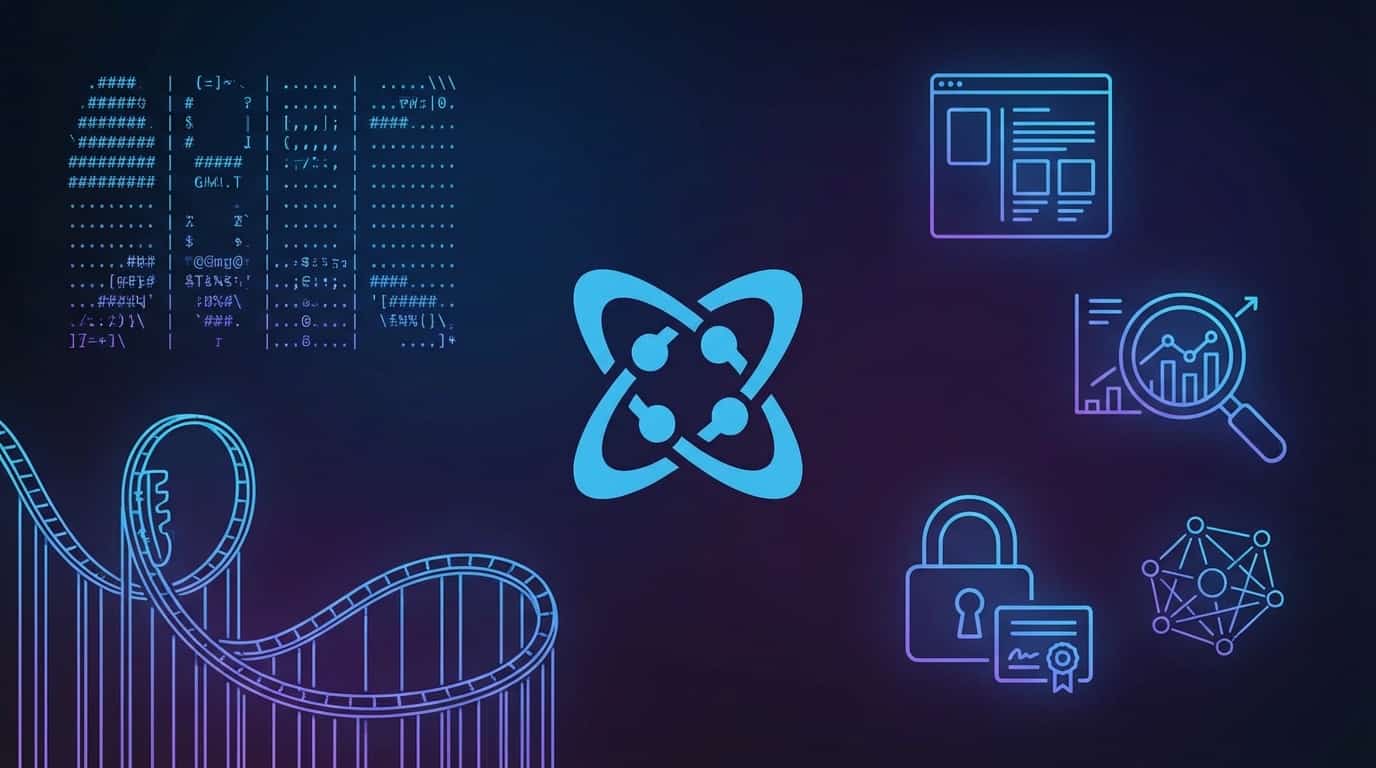
A deep technical exploration of ASCII rendering is teaching developers why characters aren't pixels. Someone put Claude Code inside Rollercoaster Tycoon. And ClickHouse just acquired the observability platform powering LLM applications everywhere. Here's what you need to know.
ASCII Characters Are Not Pixels
Alex Harri's deep dive into ASCII rendering challenges assumptions about text-based graphics. The Hacker News discussion shows developers reconsidering how they think about terminal output.
The core insight: treating ASCII characters as simple rectangular blocks produces inferior results. Characters have varying visual weights, shapes, and densities. A period occupies different visual space than an "M" even in monospace fonts.
Why This Matters for Developers
Terminal UI Design: If you're building CLI tools, understanding character density affects readability. Progress bars, tables, and visualizations benefit from this knowledge.
Accessibility Considerations: Text rendering affects how screen readers and accessibility tools interpret output. Understanding the visual layer helps build more inclusive tools.
Creative Coding: ASCII art generators, terminal games, and text-based visualizations improve dramatically when you account for character properties beyond simple positioning.
For content platforms displaying code, terminal output, or technical documentation, rendering quality matters. Cosmic's markdown support handles code blocks with proper formatting, but understanding these fundamentals helps you build better developer experiences.
Claude Code Builds a Rollercoaster Empire
Ramp's engineering team put Claude Code inside Rollercoaster Tycoon, creating an AI agent that designs and manages theme parks. The discussion explores what this reveals about AI capabilities and limitations.
The experiment goes beyond novelty. Claude Code interacts with the game through a structured interface, making decisions about ride placement, pricing, and park management. It demonstrates agentic behavior in a constrained environment with clear feedback loops.
What This Reveals About AI Agents
Bounded Problems Work Best: Rollercoaster Tycoon provides clear objectives, immediate feedback, and constrained action spaces. AI agents excel when boundaries are well-defined.
Tool Use Matters: Claude succeeds here because it has structured interfaces for actions. The quality of your API design directly affects how well AI can use your tools.
Feedback Loops Enable Learning: The game provides immediate consequences for decisions. AI agents need similar feedback mechanisms in production environments.
For content workflows, this reinforces why Cosmic's AI capabilities keep humans in review loops. AI can draft, suggest, and iterate—but clear interfaces and feedback mechanisms determine success.
ClickHouse Acquires Langfuse
Langfuse announced their acquisition by ClickHouse, combining LLM observability with high-performance analytics. The Hacker News thread examines what this means for the AI infrastructure landscape.
Langfuse provides tracing, evaluation, and monitoring for LLM applications. ClickHouse offers blazing-fast analytical queries. Together, they promise to solve the growing challenge of understanding what your AI systems actually do.
Why Observability Matters for AI
Debugging Gets Harder: Traditional debugging assumes deterministic behavior. LLMs produce variable outputs. You need observability to understand patterns.
Cost Management: AI API calls add up. Tracing helps identify expensive operations, redundant calls, and optimization opportunities.
Quality Assurance: Monitoring model outputs over time reveals drift, edge cases, and failure modes before users report them.
For teams using AI in content workflows, observability becomes essential at scale. Understanding which prompts work, where generation fails, and how costs accumulate informs better implementations.
Cloudflare's Astro Acquisition Continues Making Waves
Cloudflare's acquisition of Astro remains a hot topic, with the discussion now exceeding 900 comments. Developers continue processing what framework consolidation means for the ecosystem.
The conversation has evolved beyond initial reactions to substantive questions:
- Will Astro's vendor-neutrality survive?
- How will this affect competing hosting platforms?
- Does framework ownership by infrastructure companies benefit developers?
The Consolidation Pattern
This follows a clear trend: Vercel owns Next.js, Netlify invests in framework partnerships, now Cloudflare owns Astro. The pattern suggests hosting companies see framework control as strategic.
For developers, the practical question is dependency management. Building on frameworks owned by infrastructure companies creates implicit platform preferences. Cosmic's API-first architecture remains framework-agnostic—your content works regardless of which framework or hosting platform you choose.
6-Day TLS Certificates Are Here
Let's Encrypt announced 6-day certificates alongside IP address certificate support. The discussion explores implications for certificate automation.
Shorter certificate lifespans reduce exposure windows when certificates are compromised. But they require robust automation—manual renewal becomes impossible.
What This Means for Web Infrastructure
Automation is Mandatory: If you're not automating certificate renewal, 6-day certificates force the issue. Tools like certbot and cloud provider integrations become essential.
Revocation Becomes Less Critical: With certificates expiring in days, lengthy revocation processes matter less. The exposure window shrinks naturally.
Infrastructure Maturity Test: Organizations that struggle with certificate automation have deeper infrastructure problems. This surfaces them.
For content platforms, certificate management should be invisible. Cosmic handles TLS termination and certificate management automatically—you focus on content, not infrastructure.
Practical Takeaways
From today's discussions:
Understand Your Primitives: The ASCII rendering article shows how deeper understanding of fundamentals produces better results. This applies across development—know your tools at a lower level than you think necessary.
Design for AI Interaction: Claude in Rollercoaster Tycoon succeeds because of well-structured interfaces. Build your APIs with AI consumers in mind.
Observe Your AI Systems: The Langfuse acquisition signals that LLM observability is becoming essential infrastructure. Plan for it.
Consider Platform Dependencies: Framework acquisitions by hosting companies create implicit dependencies. Choose architectures that preserve flexibility.
Automate Everything: 6-day certificates make automation mandatory. If something requires manual intervention at scale, fix it now.
Building for What's Next
These stories share a theme: infrastructure is maturing. ASCII rendering becomes a solved problem when you understand the fundamentals. AI agents work when interfaces are well-designed. Observability enables scale. Automation enables reliability.
Cosmic provides content infrastructure built on these principles: APIs designed for both human and AI consumers, observability through our dashboard, and automation that eliminates manual work. Build on foundations that handle complexity so you can focus on creating value.
Ready to build on modern content infrastructure? Start with Cosmic and experience what reliable, developer-friendly content management feels like.