
Cosmic
August 1, 2026
This article is part of our ongoing series exploring the latest developments in technology, designed to educate and inform developers, content teams, and technical leaders about trends shaping our industry.
OpenAI published a detailed breakdown of ten advances in mathematics and theoretical computer science. Microsoft shipped Flint, a visualization language built for the AI era. Y Combinator released qm, a multiplayer agent harness designed for collaborative work. Here is what developers should know.
OpenAI publishes ten advances in mathematics
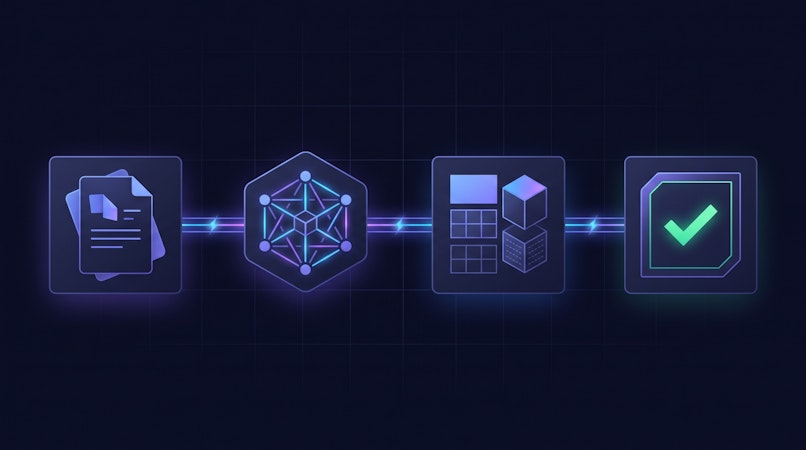
OpenAI released a detailed post covering ten advances in mathematics and theoretical computer science. The publication represents a shift in how AI labs communicate research progress, moving beyond benchmark scores to concrete mathematical contributions.
The Hacker News discussion drew significant engagement, with developers debating the practical implications of AI-assisted theorem proving and whether these advances translate to real-world engineering problems.
For teams building content pipelines, the underlying capability matters: models that can reason through mathematical proofs can also reason through complex content transformations, metadata extraction, and structured data generation.
Microsoft ships Flint for AI-native visualization
Flint is a new visualization language from Microsoft designed specifically for the AI era. Rather than requiring developers to write imperative charting code, Flint lets you describe what you want to visualize in natural language and outputs the corresponding chart.
The approach reflects a broader pattern in developer tooling: declarative specifications that AI can interpret and render. Teams using headless CMS platforms can see the connection immediately. Content models describe structure declaratively. AI interprets that structure to generate, validate, and transform content. Flint applies the same principle to data visualization.
The project is available on GitHub with documentation covering integration patterns for web applications.
qm: multiplayer agents for collaborative work
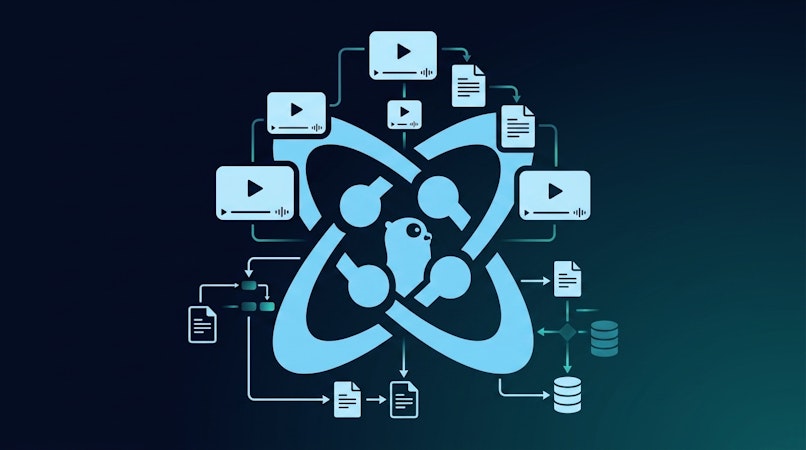
Y Combinator released qm, described as a multiplayer agent harness for work. The tool lets multiple AI agents collaborate on tasks, share context, and hand off work to each other.
This is the infrastructure layer for what many teams are building manually: agent workflows where one agent researches, another drafts, and a third reviews. qm provides the coordination primitives instead of requiring custom orchestration code.
The Hacker News discussion focused on practical deployment patterns, with developers sharing examples of agent teams handling customer support, code review, and content production pipelines.
DeepSeek V4 Flash pricing draws attention
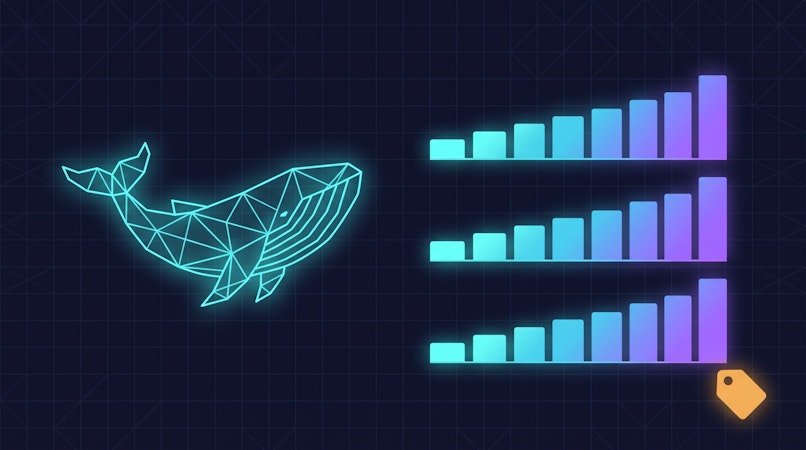
DeepSeek shipped an update to V4 Flash with cache-friendly pricing that undercuts most competitors. The analysis on Artificial Analysis shows an Intelligence Index of 50 at the lowest price point in its performance tier.
For teams running content generation at scale, the economics matter. A model that costs half as much per token while maintaining quality doubles your effective budget. DeepSeek's aggressive pricing continues to compress margins across the industry.
Session portability becomes a talking point
A post titled The session you cannot take with you triggered a discussion about data ownership and vendor lock-in. The argument: authentication sessions represent user state, and that state should be portable across services.
The conversation connects directly to headless CMS architecture. Content APIs that let you export everything, import anywhere, and maintain full ownership of your data are built on the same principle. Your content sessions, your workflows, your agent configurations belong to you.
Solid Queue adds fiber workers
Solid Queue 1.6.0 shipped with fiber worker support, bringing Ruby's lightweight concurrency primitives to Rails background job processing. The release matters for teams running Rails applications that need high-throughput job processing without the memory overhead of thread-per-worker models.
Background jobs power most content automation: scheduled publishing, webhook processing, AI generation pipelines. More efficient job processing means more headroom for agent workloads.
Tailscale transparency on Hugging Face incident
Tailscale published a transparent post-mortem explaining that their product did not prevent an intrusion at Hugging Face. The candor is notable: most security vendors would quietly move on.
The post reinforces that zero-trust networking is one layer, not the entire security model. Defense in depth remains the standard. For teams handling content through APIs, this means authentication, authorization, rate limiting, and audit logging all working together.
What this means for content teams
Three patterns emerge from this news cycle.
First, AI tooling is becoming collaborative. Single agents give way to agent teams. Tools like qm provide infrastructure for what content teams have been building manually: review workflows, generation pipelines, and multi-step content operations.
Second, pricing pressure continues. DeepSeek's aggressive moves compress costs across the industry. Teams that architected for model-agnostic operation can switch providers without rewriting pipelines.
Third, transparency builds trust. Tailscale's honest post-mortem, OpenAI's detailed research publication, and Microsoft's open-source release all reflect a shift toward showing work rather than just announcing results.
Building content infrastructure that adapts to these shifts means starting with an API-first foundation. Cosmic AI agents coordinate content, code, and browser capabilities through one platform. Start building for free and see how model-agnostic architecture keeps your options open as the landscape evolves.
Build AI-powered content workflows with Cosmic
Your content layer for AI agents. Structured, versioned, queryable, and analytics-ready out of the box.