
Cosmic
September 19, 2026
This article is part of our ongoing series exploring the latest developments in technology, designed to educate and inform developers, content teams, and technical leaders about trends shaping our industry.
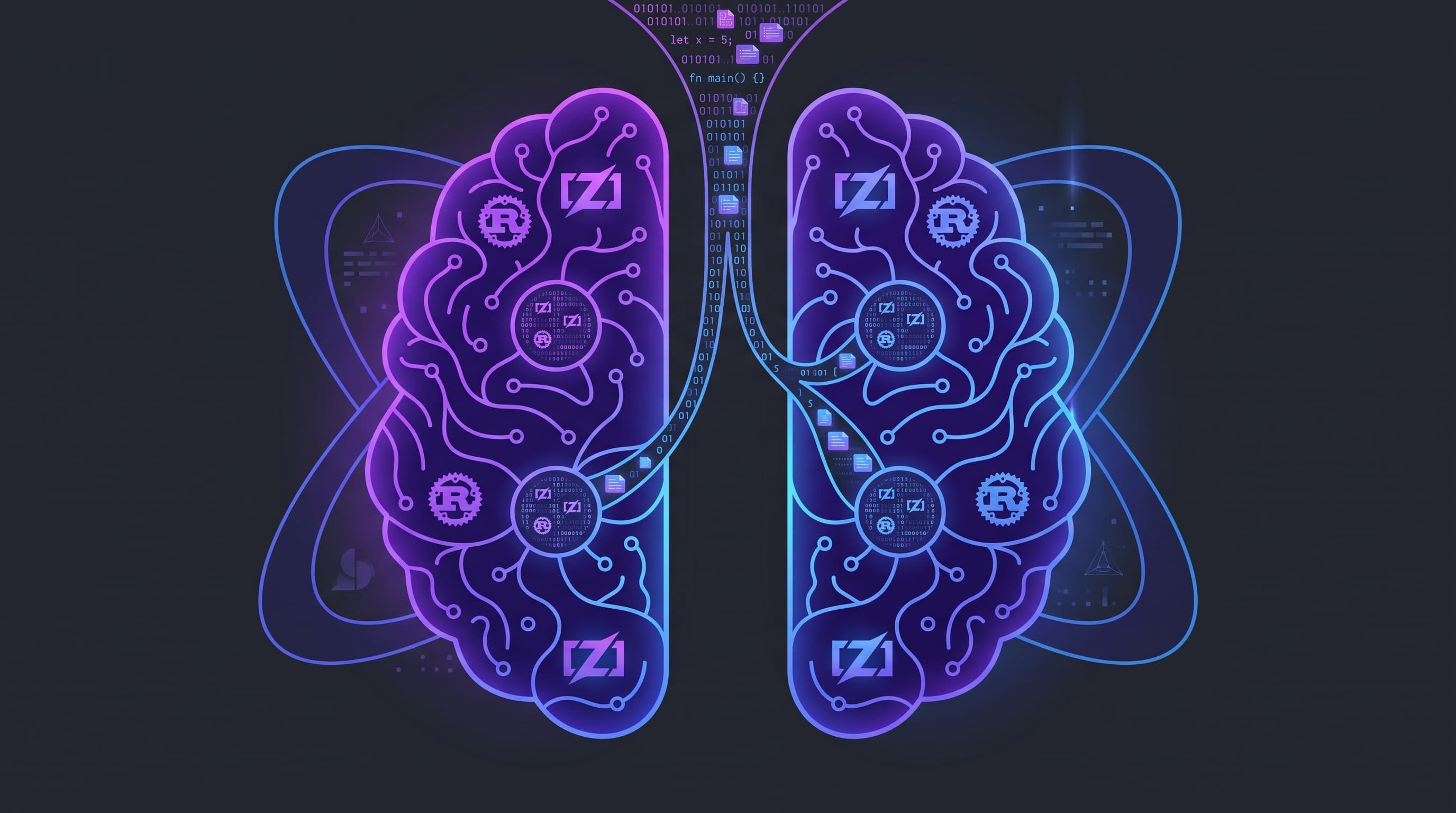
Stanford researchers claim the brain is two separate organs. A developer argues AI-generated posters can actually look good. And Zig keeps pulling Rust developers into its orbit. Here is what is happening.
Stanford: The Brain Is Two Organs
Stanford Medicine published research suggesting the human brain functions as two separate organs rather than one unified system. The Hacker News discussion digs into the neuroscience.
The finding challenges assumptions about brain architecture that have shaped everything from AI research to cognitive therapy. For teams building AI systems, this raises questions about whether current neural network architectures adequately model actual cognition.
AI Posters That Do Not Look Terrible
A post titled AI-generated posters don't have to be horrible sparked extensive debate about AI in design workflows.
The author walks through techniques for getting usable event posters from image generators, moving past the usual advice of "just use prompts." The thread splits between designers defending craft and pragmatists who see AI as another tool in the stack.
For content teams generating visual assets at scale, the practical tips matter more than the philosophical debate.
A Rust Developer Tries Zig
The post What Zig felt like, coming from Rust documents one developer's experience switching languages. The discussion compares tradeoffs.
Zig's appeal to Rust developers keeps growing. The core pitch: similar performance guarantees with less ceremony. The thread debates whether Zig's simplicity is a feature or whether it just defers complexity to runtime.
For systems programming teams evaluating toolchains, the firsthand account offers concrete comparisons.
Cloudflare Saves 100TB of RAM
Cloudflare published details on how they saved another 100TB of RAM with math. The thread appreciates the scale.
The optimization involves probabilistic data structures and careful memory management. At Cloudflare's scale, even small per-request savings multiply into significant infrastructure cost reductions.
Android 17 and AOSP Concerns
GrapheneOS flagged that Android 17 adds new APIs without releasing to AOSP, breaking a pattern that held since Android 3.x. The discussion raises concerns about Android's open source future.
For teams building Android applications, the implications depend on which APIs matter for their use case. For projects like GrapheneOS that depend on AOSP access, the change signals a potential shift in how Google manages Android development.
GPT-6 Astra Cracks WWI Cipher
GPT-6 Astra solved a WWI German radio cipher that had resisted previous analysis. The thread examines the methodology.
The cipher was not considered unbreakable, but the speed and approach demonstrate how reasoning models can accelerate historical research. Archivists and researchers have a new tool for unlocking inaccessible documents.
Quick Hits
Terence Tao on math beyond proof: Tao argues that if math is more than proof, we need to better celebrate the rest. The discussion explores what that means for mathematical practice.
ZX Spectrum gets a desktop: A developer built a graphical desktop for the ZX Spectrum. The thread marvels at fitting a windowing system into 48K.
Full-text search for Postgres: PlanetScale introduced Tin, a full-text search solution for Postgres. The discussion compares it to existing options.
New cat species: National Geographic reports on the first new cat species discovered in 100 years. The thread appreciates the find.
Tutankhamun's tomb: Nature covers new evidence for hidden chambers beyond Tutankhamun's tomb. The discussion speculates on what might be inside.
What This Means for Content Teams
The Stanford brain research is a reminder that the mental models we use to build AI systems are approximations. When your content operations depend on AI agents, understanding their limitations matters as much as leveraging their capabilities.
The AI poster discussion shows the field maturing. The question is no longer whether AI can generate images but how to direct it effectively. Teams that develop repeatable workflows get consistent results.
Cosmic's AI agents work within your content model with defined permissions. They understand your schema because they integrate with it directly. The MCP server lets tools like Claude Code and Cursor work with your content from your development environment.
Start building free or book a walkthrough to see how AI agents fit your content operations.
Give your AI agents a content backend they can write to
Structured, versioned content objects, a REST API and TypeScript SDK, and an MCP server your coding agent connects to directly. The Free plan includes 1 Bucket, 1,000 Objects, and 1 agent. No credit card required.