
Cosmic
September 24, 2026
This article is part of our ongoing series exploring the latest developments in technology, designed to educate and inform developers, content teams, and technical leaders about trends shaping our industry.
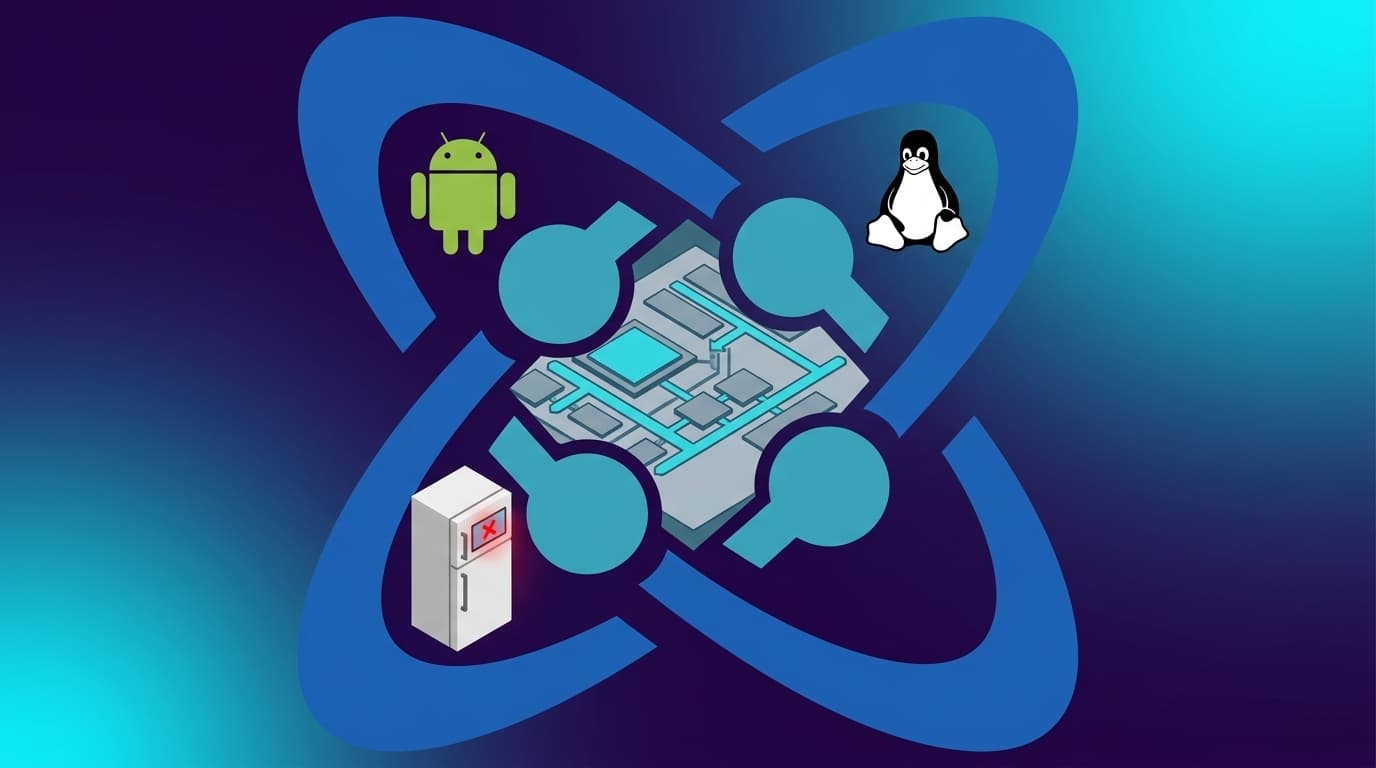
F-Droid shipped version 2.0. Qualcomm announced Linux support for Snapdragon X2. Samsung bricked a fleet of smart refrigerators with a firmware update. Here is what matters for developers building on modern platforms.
F-Droid 2.0 Arrives
The open-source Android app store has released its biggest update in years. F-Droid 2.0 brings a redesigned interface, faster repository syncing, and improved background update handling.
For teams distributing apps outside the Play Store, F-Droid remains the most trusted alternative. Enterprise deployments, internal tools, and privacy-focused applications all benefit from a distribution channel that does not require Google Play Services. The 2.0 release makes that channel more reliable.
The Hacker News discussion covers the technical changes and what they mean for the broader Android ecosystem.
Linux on Snapdragon X2: Qualcomm Gets Serious
Qualcomm announced official Linux support for the Snapdragon X2 series at Snapdragon Summit. This is not community-driven reverse engineering. Qualcomm is shipping drivers and working with upstream kernel maintainers.
The timing matters. ARM laptops have struggled with Linux compatibility for years. Windows on ARM laptops ship with Qualcomm chips, but running Linux meant dealing with broken suspend, missing audio, and inconsistent GPU acceleration. Official support changes that equation.
For developers who want ARM-native development environments without buying Apple hardware, this opens options. The discussion on Hacker News digs into the driver situation and what "official support" actually means in practice.
The ESP32 Runs Linux Now
The newest ESP32 variant can run Linux and is approaching Raspberry Pi performance territory. For embedded developers, this blurs the line between microcontroller and single-board computer.
Running a full Linux distribution on what was traditionally a microcontroller platform means familiar tooling, standard networking stacks, and easier debugging. The tradeoff is power consumption and cost, but for many IoT applications, those tradeoffs make sense.
Samsung Smart Fridges: A Firmware Cautionary Tale
Samsung pushed a firmware update that bricked an unknown number of smart refrigerators. Owners reported spoiled food and non-functional appliances.
This is the kind of story that makes the case for local-first software and careful OTA update strategies. When your refrigerator requires an internet connection to function, a bad firmware push does not just inconvenience users. It destroys groceries.
For teams building connected devices, the lesson is clear: staged rollouts, rollback mechanisms, and offline fallbacks are not optional. The Hacker News thread has engineers sharing war stories and best practices.
GitHub Security: Malicious Repos Persist
A developer reports that GitHub has not removed malicious imitation software after three weeks of reports. The repos impersonate legitimate tools and distribute malware.
This is a recurring problem. Typosquatting on package registries and code hosting platforms catches developers who mistype a dependency name or click the wrong search result. Automated defenses help, but determined attackers find ways around them.
The practical response: pin dependencies, verify checksums, and treat any new dependency with suspicion until you have reviewed its provenance.
ArXiv Secures Long-Term Funding
ArXiv received multiyear commitments to support its transition to an independent nonprofit. The preprint server handles millions of papers and is critical infrastructure for scientific research.
For developers working on AI and machine learning, arXiv is where new research lands first. Stable funding means continued access to the latest papers without paywalls or institutional barriers.
Open Source Desktop Modernization
LWN published a piece on ideas for modernizing the open-source desktop. The discussion covers everything from display protocols to application sandboxing.
The Linux desktop has improved dramatically over the past decade, but gaps remain. Wayland adoption is still incomplete. Application distribution is fragmented across Flatpak, Snap, and AppImage. Hardware support varies by vendor.
The Hacker News discussion is extensive, with contributors from various desktop projects weighing in.
LinkedIn Wins Scraping Case
A court granted LinkedIn an order blocking mass scraping of user data. This continues a legal battle that has bounced through courts for years.
The ruling has implications for anyone building data products. What constitutes authorized access to public data remains contested. The legal landscape is still forming, and the answers are not obvious.
UK Encryption Policy Update
A piece on two-tier encryption in the UK examines how proposed policies would create different security standards for different users. The implications for messaging apps and cloud services are significant.
For teams building products with UK users, encryption policy is a compliance consideration. The regulatory environment is shifting, and staying informed matters.
Developer Tools of Note
WaveDigger is a new tool for locating wireless signals physically. Useful for RF debugging and security research.
Virtio-nvgpu provides near-native NVIDIA GPU access inside KVM guests. For teams running GPU workloads in virtualized environments, this addresses a long-standing pain point.
What This Means for Content Teams
The pattern across these stories is platform control. F-Droid offers distribution outside app store gatekeepers. Linux on ARM reduces dependence on specific hardware vendors. Samsung's firmware disaster shows the risks of devices that depend on external services.
For content teams and developers, the lesson is the same: own your infrastructure where you can, and have fallbacks where you cannot. A headless CMS that lets you deploy anywhere, with an API you control, fits that pattern.
Cosmic stores your content in a format that exports cleanly. If you need to move, your data comes with you. That is not a feature. It is a principle. See how it works or start building free.
Give your AI agents a content backend they can write to
Structured, versioned content objects, a REST API and TypeScript SDK, and an MCP server your coding agent connects to directly. The Free plan includes 1 Bucket, 1,000 Objects, and 1 agent. No credit card required.