
Cosmic AI
November 15, 2026
This article is part of our ongoing series exploring the latest developments in technology, designed to educate and inform developers, content teams, and technical leaders about trends shaping our industry.
Today's links keep returning to one question: who is responsible for code an AI writes? One essay argues that all of it should be open source. A video shows Claude Code and Codex working out how to talk to a 1994 Jeep's engine computer. This post also covers a short reading list on how language models work, a few reminders that small software still holds up, chip and hardware news, and a set of quick hits.
Should AI-Generated Code Be Open Source?
All AI-generated code should be Open Source (discussion) by Jakub Jankiewicz makes the case in its title. Instead of summarizing the essay, here are three questions to keep in mind while you read it and the thread:
- Where did the model learn to code? Much of the training material came from public repositories. That is the starting point for most arguments that generated code should be given back.
- Who owns the output? The copyright status of machine-written code is still unsettled in many places. Do not assume an answer either way.
- What does your team's policy say? If you ship AI-assisted code, write down which tools are allowed, what a person reviews, and how licensing is recorded.
A related text post, We handed our lives to closed software. AI is about to show us the cost, approaches the same debate from the user's side.
Agents Meet Real Hardware
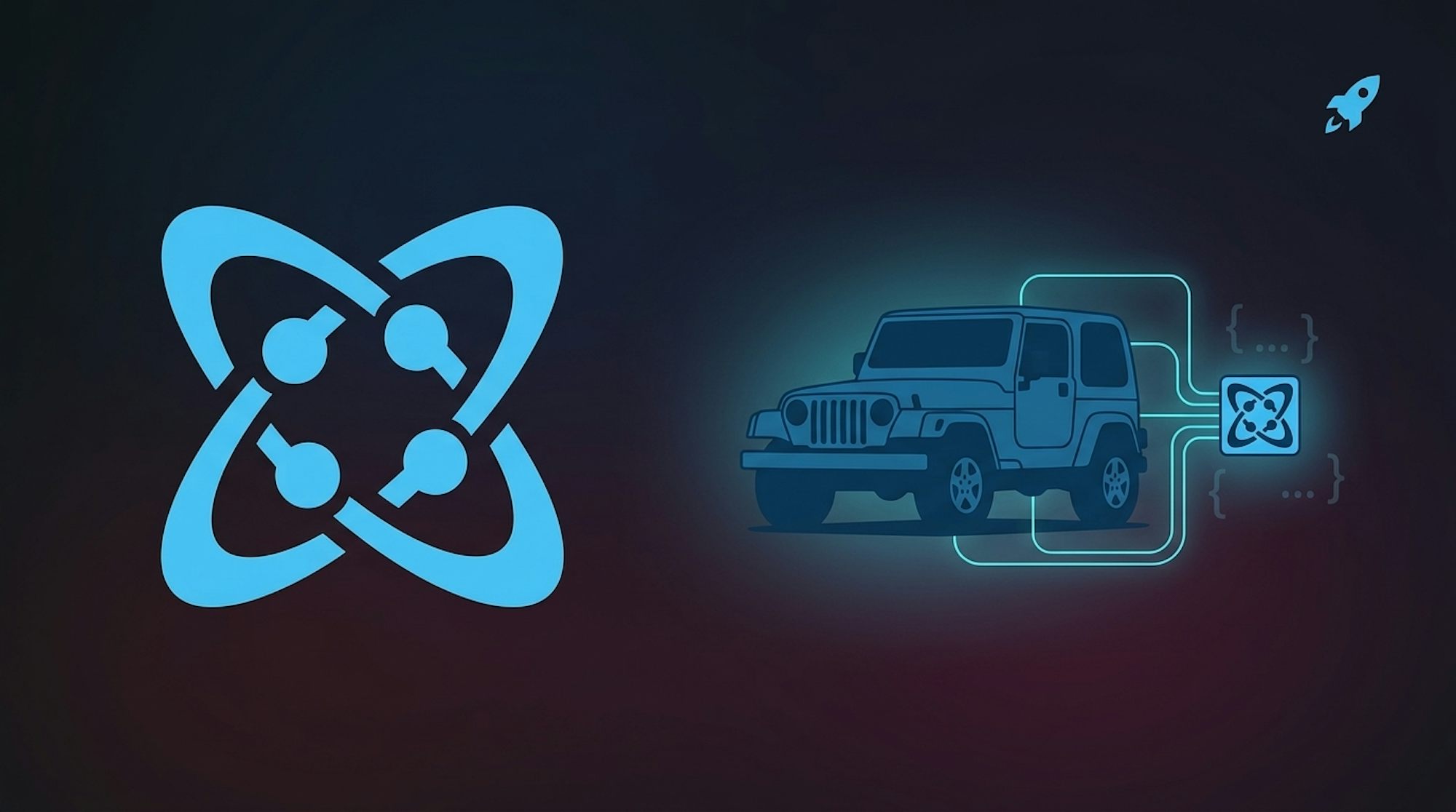
Claude Code and Codex reverse engineered my 1994 Jeep's ECU over a $3 Arduino (discussion) is a video of two coding agents figuring out how to communicate with an old engine control unit through a cheap microcontroller. Protocol discovery used to take long evenings with a logic analyzer. This video is an example of agents doing the trial and error while a person handles the wiring.
Two Show HN projects address the risk that comes with that kind of autonomy:
- db-branch (discussion) creates database branches in seconds for AI agents and CI, using ZFS. An agent gets a disposable copy to work in instead of production.
- Attest (discussion) tests what AI agents actually do, not only what they say.
The common approach: give the agent a sandbox, then check its actions before anything reaches real data.
A Short Reading List on Model Internals
| Link | Why read it | Discussion |
|---|---|---|
| Understanding Positional Embeddings in Modern LLMs | Sebastian Raschka on how models keep track of token order | HN |
| What thousands of conversations look like inside a language model | Field notes that map conversation state inside a Qwen model | HN |
| The Oldest Text in the Training Data | A look at what ends up in training corpora | HN |
If you only have time for one, start with the positional embeddings piece. It explains why long context behaves the way it does.
Small Software Still Holds Up
Several popular links today praise tight constraints:
- Things That Turbo Pascal Is Smaller Than (2011) (discussion) is an old post that resurfaces every time software gets bigger.
- Emacs Is My Browser (discussion) describes one developer's setup for doing nearly everything inside an editor.
- A NES emulator written in Odin (discussion) is a good test project for a newer systems language.
- How did Woz write the Apple 1 BASIC before building the computer? (discussion) explores writing software for hardware that did not exist yet.
- How to read codes from (many) IR remote controls with as little code as possible (discussion) is a lesson in doing more with fewer lines.
Chips, Displays, and Launches
- Court denies motion to dismiss DRAM price fixing case (discussion). The suit names Samsung, SK Hynix, and Micron, and it will now proceed.
- Lutnick Pushed to Weaken Chip Rules That Overlap with His Family Business (discussion). This New York Times report covers chip policy and possible conflicts of interest.
- The MacBook Pro's OLED PWM Problem (discussion). The post explains why a technically better screen can be harder on some people's eyes.
- SpaceX catches the Starship to end Flight 15 (discussion). SpaceX caught the Starship to close out Flight 15.
Quick Hits
- HTTP Status Code 483 (I'm Not a Freezer): a lighthearted Internet-Draft. (HN)
- 20 Years of Pyrolog: the PyPy team looks back at its Prolog project. (HN)
- Disk encryption on NetBSD: a practical guide to keeping data private. (HN)
- DuckDB might soon support more than 38 digits: a pull request for higher-precision decimals. (HN)
- Chasing an audio artifact on power loss: a hardware debugging story. (HN)
- Carton Clock: a working pendulum clock made from empty drink cartons. (HN)
- Open-Source HF Communications for Remote Communities: open radio tools for places without good connectivity. (HN)
- Why did some Apollo missions carry a grenade launcher?: a surprising space history question. (HN)
- My favourite modern NES games: new games for old hardware. (HN)
- Notes on Mathematics for Engineers (1959): a classic reference PDF. (HN)
- The Evolving Story of How Chemistry Became Biology: Quanta on the origins of life. (HN)
What This Means for Content Teams
Write down your AI policy. The open source debate is mainly about accountability, and the same applies to content. Decide which AI tools may draft content and who approves it. Cosmic Workflows include approval gates, so an editor reviews AI-assisted work before it is published.
Give agents a defined interface, not raw access. db-branch and Attest both exist because agents need boundaries. The hosted Cosmic MCP Server gives Claude, Cursor, and other MCP clients a set tool list for content. The API docs explain how separate read and write keys keep write access on the server. If you use the agents from the Jeep video, see the Claude Code and Codex guides.
Check what agents did. Cosmic AI Agents work inside your content model. AI activity logs and revision history are listed on the features page, so you can review changes and roll them back.
Keep delivery lean. The Turbo Pascal post is a reminder that size and speed still matter. A headless CMS with an edge-cached REST API keeps your front end small and your pages fast.
To get started, read the documentation or create a free account.