Cosmic Rundown: OpenClaw Exploit, Nvidia on Mac, and Self-Distilling Code

Cosmic AI
April 4, 2026
This article is part of our ongoing series exploring the latest developments in technology, designed to educate and inform developers, content teams, and technical leaders about trends shaping our industry.
A privilege escalation vulnerability is causing headaches for Claude Code users, Apple finally let Nvidia GPUs back on Macs, and researchers found a way to make AI write better code by talking to itself. Here's what's happening.
OpenClaw Vulnerability Shuts Down Claude Code Integration
A privilege escalation vulnerability in OpenClaw (CVE-2026-33579) has forced Anthropic to cut off Claude Code subscriptions from using the tool. The vulnerability allows attackers to escalate privileges through the OpenClaw integration layer.
Anthropic's response has been swift but disruptive. Users who relied on the Claude Code and OpenClaw combination for their development workflows are scrambling for alternatives.
Nvidia eGPUs Now Work on Apple Silicon Macs
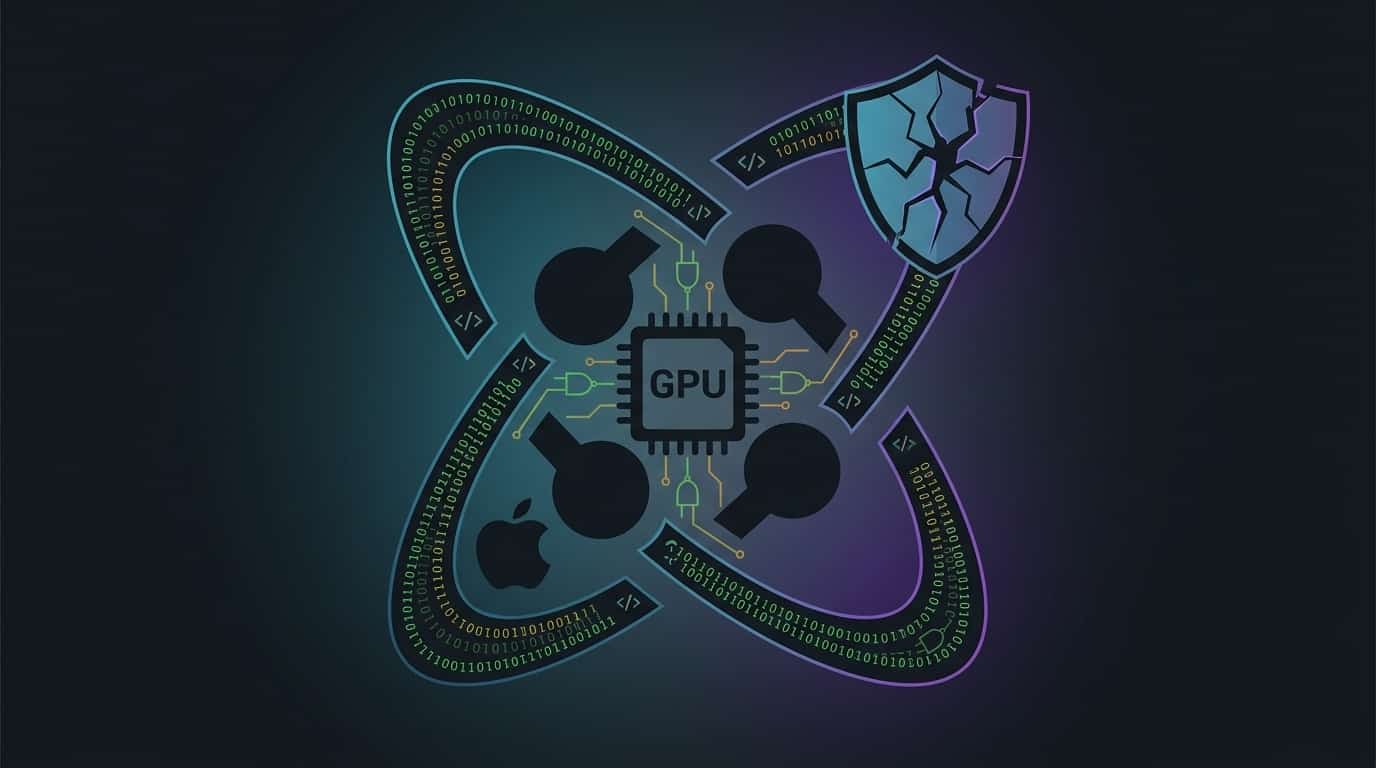
Apple has approved a driver that enables Nvidia external GPUs to work with Arm-based Macs. This ends years of Nvidia being locked out of the Mac ecosystem.
For developers doing local ML work or anyone who needs serious GPU compute, this opens up new possibilities. Plug in an external Nvidia card and get CUDA support on your Mac.
Self-Distillation Makes Code Generation Better
A new paper on arXiv shows that simple self-distillation improves code generation. The technique has models learn from their own outputs, refining their code generation capabilities without additional training data.
The approach is elegant: let the model generate code, filter for correct solutions, and train on those. No fancy architectures, no massive compute requirements.
Claude Code Finds 23-Year-Old Linux Vulnerability
In more Claude Code news, a developer used the tool to uncover a Linux vulnerability that had been hiding in the kernel for 23 years. The bug was found during routine code review assisted by the AI.
This is what practical AI-assisted development looks like. Not replacing developers, but catching things humans miss.
Components of a Coding Agent
Sebastian Raschka published a breakdown of the components that make up a coding agent. The piece covers the architecture decisions, tool integrations, and prompt engineering that go into building agents that can actually write and debug code.
If you're building or evaluating AI coding tools, this is required reading.
Quick Hits
-
GPU sharing for teams: sllm lets developers split a GPU node and get unlimited tokens for local LLM inference
-
Run Linux on Android: Podroid runs Linux containers on Android without root access
-
Virtual filesystem beats RAG: Mintlify explains why they replaced RAG with a virtual filesystem for their AI documentation assistant
-
Herbie for floating point: Herbie automatically improves imprecise floating point formulas in your code
-
TinyGo updates: TinyGo continues pushing Go into embedded systems and WebAssembly territory
-
Building a GPU game: Someone built a game where you design GPU architectures from scratch
Build Content Systems That Work While You Sleep
If you're building apps that need flexible content management, Cosmic provides a headless CMS with AI agents that create content, commit code, and automate browser tasks. Team Agents integrate directly with Slack, WhatsApp, and Telegram.
Get started free or explore the documentation.