How We Won a Launch-Day Search Term in 48 Hours, and Why It Didn't Convert


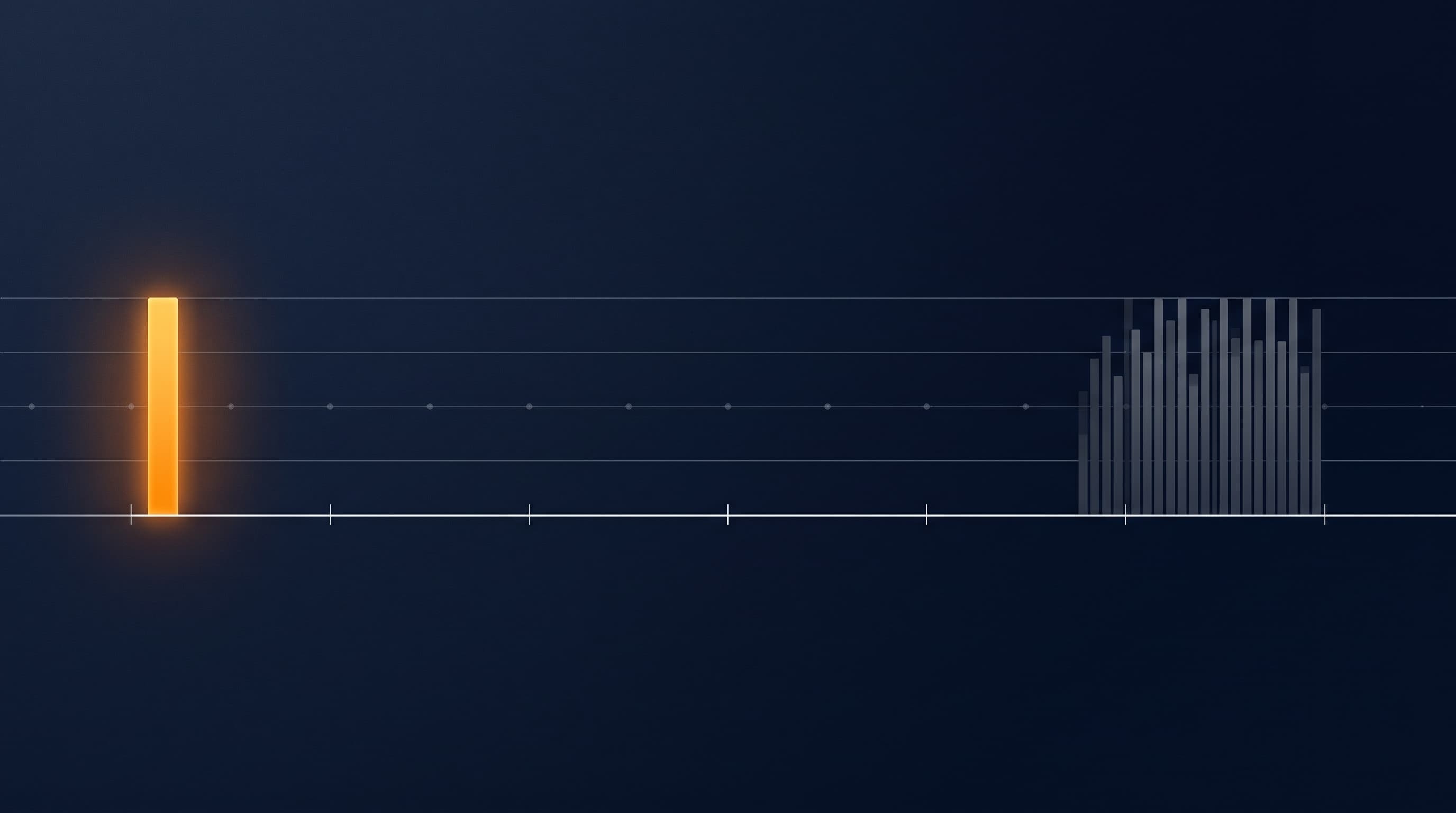
Anthropic announced Claude Opus 5.5 on September 22, 2026. Our comparison post, Claude Opus 5.5 vs Opus 5, was created in our CMS at 19:42 UTC the same day.
Within 48 hours it was the highest-traffic page on cosmicjs.com. Thirty days later it has 9,838 visitors against our homepage's 3,757.
It also bounces at 96.63% and produced 17 signup clicks in the last seven days.
Both of those numbers are in this post, because both are true and the second one is the part nobody writes up.
The short version
All figures below are from Cosmic Insights, 30-day window ending September 28, 2026, unless noted.
- Published the same calendar day the model shipped
- 9,838 visitors, 10,147 sessions, 10,408 events
- 2.6x our homepage's visitors over the same window
- 96.63% bounce rate, 9,805 bounced sessions
- 17 signup CTA clicks over 7 days, which is 0.17% of sessions
- $0 attributed revenue
- Traffic source: Google organic, desktop, US-led
Why a launch-day term is winnable
On the day a new model version ships, the comparison query has demand and no supply. People want to know whether to switch. Almost nobody has published yet, because everyone else is still reading the announcement.
That means the ranking contest on day one is not the usual authority contest. The competing set is nearly empty. A page that exists beats a page that is still in review.
Our own profile makes the point. Read from Ahrefs on September 28, 2026: Domain Rating 71, 2.9K referring domains, and 348 organic keywords. DR 71 is respectable. 348 keywords is a small footprint for it. We did not out-authority anyone on this term. We were early.
The window is short. Inside a week the newsletters, the competitor blogs and the content farms all ship the same comparison, and ranking starts requiring the authority you did not need on day one.
The playbook
1. Watch the primary source. Vendor newsrooms, not aggregators. By the time a launch reaches a roundup, the window is half closed.
2. Draft against the announcement itself. Pull specifics from the vendor's own post and docs. Anything you cannot source, leave out.
3. Answer the question in the first screen. Somebody searching "X vs Y" wants a verdict. Put a short-answer table above everything else. This will hurt your engagement metrics and it is still correct.
4. Publish before you polish. Our post shipped the same day and was edited afterward. The edits could wait. The publish could not.
5. Point at the durable page. Version comparisons decay. Link them to the evergreen page that will still matter in six months.
What went wrong
The post bounces at 96.63%. 9,805 of 10,147 sessions ended on that page.
The reason is the design. A reader arrives with a question that has a short answer, gets the short answer in the first screen, and leaves satisfied. The post works. The funnel does not.
We patched a contextual CTA into the page after the traffic arrived, positioned directly under the short-answer table instead of at the bottom of the article, and aimed at the decision the reader had just made rather than at our product in general.
It earned 17 clicks against 10,147 sessions, or 0.17%.
Over the same seven days our homepage earned 82 clicks against 4,671 sessions, or 1.76%. The homepage converts roughly ten times better per session on well under half the traffic.
So the honest reading is that a late CTA on high-volume, low-intent traffic is worth very little. The traffic was real. The pipeline was not.
What went wrong in measurement
Two problems worth naming, because they will hit anyone running this play.
Search Console lags about three days. When we queried our own page on September 24, Search Console returned zero rows for September 22 through 24, site-wide, on both the query and page dimensions. Not for our URL specifically. For every page. So during the exact days the spike happened, we could see the traffic arriving and had no idea which query was sending it.
Our tools disagree with each other. For September 14 to 21, Search Console reported 1,264 clicks over eight days, about 158 per day site-wide. Ahrefs estimated 5.4K organic visits per month, which is roughly consistent. Cosmic Insights recorded around 981 Google organic visitors per day over an overlapping window.
Part of that gap is the window: our Insights figure includes spike days Search Console had not yet reported, and brand-new launch terms do not appear in a keyword database for weeks. That does not explain all of it, and we have not closed the rest.
Treat every absolute number in this post as tool-specific. The comparisons we lean on are same-tool, same-window ratios, which is the part that survives the discrepancy.
What we would do differently
- Ship the CTA with the post. Retrofitting one onto live traffic is measurable and small.
- Match the CTA to arrival intent. Someone choosing a model is not shopping for a CMS. The only bridge that works is the problem they are about to have.
- Instrument before you need it. Our signup event does not carry a referring page, so we can see signups and cannot attribute them to a post. That is cheap to fix in advance and expensive to fix retroactively.
- Do not read a traffic win as a pipeline win. Nothing in this window attributes revenue to the post.
The honest limits of this case study
This is one post, one term, one launch. n=1, and we are not going to present it as a repeatable growth system on that basis.
We also cannot show agent-level attribution. Our analytics roll traffic up by path and by object, and the agent and author dimensions return no content rows, so the authorship and timing here come from CMS timestamps rather than from analytics. We would rather say that than imply a measurement we do not have.
And our keyword footprint sits at 348 terms. One cluster performing well is not a broad program improvement, and this post is not evidence of one.
What it is evidence of is narrower and still useful: when a launch creates a brand-new comparison query, publishing the same day wins the term, and winning the term does nothing on its own unless the next step is built before the traffic arrives.
Try the thing that made this possible
The reason the post shipped the same day is that drafting, image generation, publishing and analytics live in the same place, so there was no handoff between writing it and getting it live.
You can build the same setup on Cosmic. Create an account to try it, see the plans and pricing, or book time with our CEO if you want to talk through how it would work for your team.
Give your AI agents a content backend they can write to
Structured, versioned content objects, a REST API and TypeScript SDK, and an MCP server your coding agent connects to directly. The Free plan includes 1 Bucket, 1,000 Objects, and 1 agent. No credit card required.
Continue Learning
Connect a Cosmic Agent to Google Sheets


Tony Spiro and Mia
September 25, 2026