
Cosmic
September 14, 2026
This article is part of our ongoing series exploring the latest developments in technology, designed to educate and inform developers, content teams, and technical leaders about trends shaping our industry.
Apple's Siri can now swap its AI backend, a beautiful atlas of three-body orbits launched, and fashion designers are fighting surveillance with adversarial prints.
Apple Opens the Door to Swappable Siri Backends
Code analysis reveals that Apple's Siri AI can be swapped out for Claude or ChatGPT. The Hacker News discussion explores what this means for the AI assistant landscape.
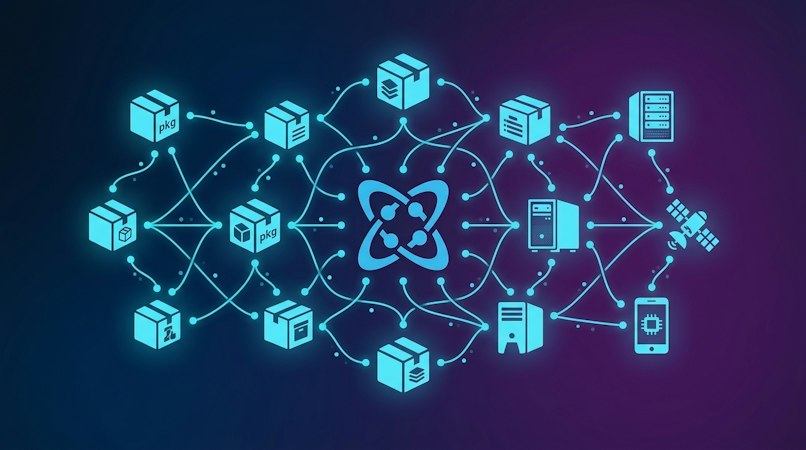
The architecture suggests Apple built Siri with interchangeable LLM backends from the start. Users could potentially choose their preferred AI provider rather than being locked into a single model. This mirrors how headless CMS architecture separates content from presentation, allowing teams to swap frontends without rebuilding their content layer.
For developers building AI-powered applications, the pattern is instructive. Designing systems with swappable components creates flexibility as the AI landscape shifts.
An Atlas of Three-Body Orbits
A new interactive site at threebodyorbits.com catalogs periodic solutions to the three-body problem. The discussion includes physicists and mathematicians explaining the significance.
The three-body problem has no general closed-form solution, but specific periodic orbits exist. This atlas visualizes them, turning abstract mathematics into something navigable. It demonstrates how good information architecture makes complex systems accessible.
Adversarial Fashion Takes on Surveillance
IEEE Spectrum covers how adversarial fashion makes a statement on the AI panopticon. The thread debates effectiveness and aesthetics.
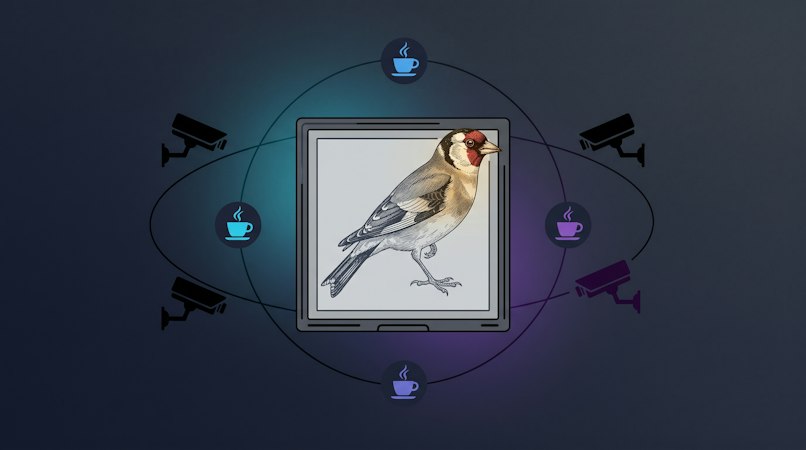
Designers are printing patterns that confuse license plate readers and facial recognition systems. The patterns exploit how computer vision models parse visual information. Whether it works in practice is debated, but the concept highlights the ongoing tension between surveillance systems and privacy.
Distributed Systems Classics
A curated list of distributed systems classics surfaced, collecting foundational papers in the field. The discussion adds recommendations.
The list includes papers on consensus, replication, and fault tolerance that remain relevant decades after publication. For engineers building systems that span multiple machines, these papers provide the theoretical foundation.
EuroBirdPortal Tracks Migration in Real Time
The EuroBirdPortal aggregates bird observation data to show live migration patterns across Europe. The thread features birders and data scientists discussing methodology.
The project combines citizen science observations with professional monitoring to create continent-scale visualizations. It is an example of how aggregating distributed data sources creates insights impossible from any single source.
A 386 PC for the RP2350
A project called Frank-386 implements a 386 PC on the Raspberry Pi RP2350 microcontroller. The discussion covers the technical challenges of running DOS-era software on modern microcontrollers.
The project emulates enough x86 hardware to boot DOS and run period-appropriate software. It is a demonstration of how much compute power now fits in a chip that costs a few dollars.
Quick Hits
Writing effective design documents: A practical guide on how to write an effective software design document generated significant discussion.
Kinesis controls Mac with neural input: A project called Kinesis enables Mac control using Meta's Neural Band. The thread explores the input possibilities.
XCancel suspended: The XCancel service is suspended until further notice. The discussion covers the implications for users.
Microsoft patch problems: Microsoft's latest patches broke audio, remote access, and paste. The thread shares workarounds.
What This Means for Content Teams
Apple's swappable AI architecture reflects a broader shift toward modular systems. When components can be replaced independently, teams gain flexibility to adopt better tools as they emerge.
Content management follows the same principle. A headless CMS separates content from presentation, so you can rebuild your frontend, add new channels, or integrate AI capabilities without migrating your content. The architecture decision made years ago determines how easily you adapt today.
Cosmic's AI agents work inside your content model with defined permissions. They understand your schema, respect your workflows, and integrate through authenticated APIs. The modular architecture means you can start with one agent and expand as your needs grow.
Start building free or book a walkthrough to see how AI agents fit your content operations.
Give your AI agents a content backend they can write to
Structured, versioned content objects, a REST API and TypeScript SDK, and an MCP server your coding agent connects to directly. The Free plan includes 1 Bucket, 1,000 Objects, and 1 agent. No credit card required.