
Cosmic
August 12, 2026
This article is part of our ongoing series exploring the latest developments in technology, designed to educate and inform developers, content teams, and technical leaders about trends shaping our industry.
A 16-year-old SQLite bug made headlines today after Tailscale traced database corruption back to a WAL-reset edge case that has existed since 2010. DeepSeek quietly dropped V4 Pro 0813. And a post arguing that AI is hollowing out mid-level engineering roles drew over 300 comments on Hacker News. Here is what caught our attention.
The SQLite Bug That Waited 16 Years
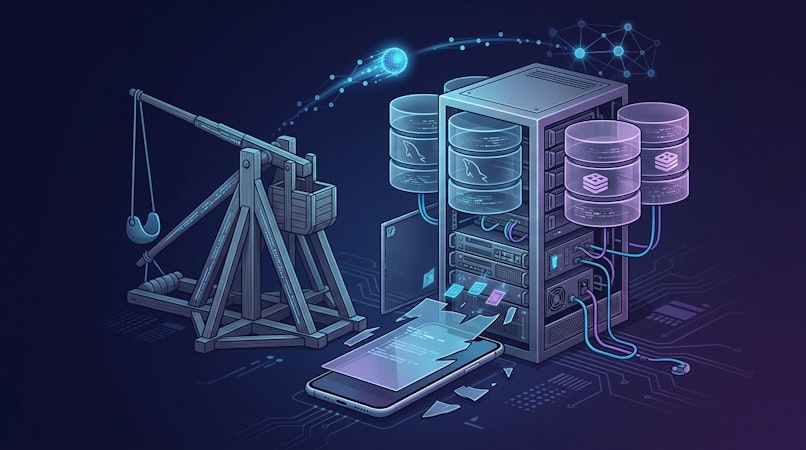
Tailscale published a detailed post-mortem on database corruption they traced to a bug in SQLite's WAL (Write-Ahead Logging) reset behavior. The bug has existed for 16 years. It affects a specific edge case where the WAL file gets reset under particular conditions, leading to silent data corruption.
The engineering work here is a reminder of two things. First, even battle-tested software carries dormant issues. Second, good observability and systematic debugging can surface problems that have been hiding for over a decade. The Hacker News discussion is worth reading for the technical depth.
For teams running SQLite in production, whether embedded in mobile apps, edge functions, or local-first architectures, the post is worth reviewing to understand if your usage patterns might trigger this condition.
DeepSeek V4 Pro 0813 Arrives Quietly
DeepSeek released V4 Pro 0813 without much fanfare. The model is now available through OpenRouter and documented in the DeepSeek API docs. Two separate posts on Hacker News surfaced the release, suggesting the developer community noticed before any official announcement landed.
The timing is interesting given the broader model race. Grok 4.6 from SpaceXAI also made news today, scoring 61 on the Artificial Analysis Intelligence Index according to their benchmarks. Meanwhile, Qwen released Qwen3.8-2.4T-A95B, a massive mixture-of-experts model.
The model landscape is fragmenting fast. For teams building AI-powered content systems, the practical question is less about which model scores highest on benchmarks and more about which one fits your latency requirements, cost structure, and specific use cases. We wrote about that decision framework in Which AI Model Should Generate Your CMS Content.
Is AI Removing the Middle Class of Software Engineering?
A post titled "AI is removing the middle class of software engineering" drew one of the largest discussions on Hacker News today. The original article argues that AI tooling is compressing the skill distribution, making senior engineers more productive while reducing demand for mid-level roles.
The HN thread is predictably polarized. Some commenters see this as the natural evolution of tooling, no different from what happened when IDEs replaced text editors or when frameworks replaced manual DOM manipulation. Others argue the comparison is false because AI tooling changes the nature of the work itself, not just the efficiency.
One thread worth following: several commenters pointed out that the framing assumes AI assistance is evenly distributed. In practice, senior engineers tend to get more value from AI tools because they know what good output looks like and can steer the model effectively. That might widen the gap rather than narrow it.
Quick Hits
Chrome renders tiny JPEGs differently. A deep dive into why small JPEGs look different in Chrome compared to other browsers. The culprit is Chrome's scaling algorithm and how it handles images below certain size thresholds. Useful reading if you have ever wondered why your image previews look inconsistent.
Vulnerability scanners spoofing AI bots. Someone is running mass vulnerability scans while spoofing user agents like ClaudeBot. The security implications are interesting. Bot detection is already difficult, and AI crawlers add a new layer of complexity for teams trying to distinguish legitimate traffic from malicious scans.
Woxi: Open-source Mathematica. A Show HN project called Woxi is attempting an open-source reimplementation of Mathematica and the Wolfram Language. Ambitious, and worth watching if you have been frustrated by Wolfram's licensing model.
License plate readers and warrants. A post arguing that license plate reader searches should require a warrant drew nearly 200 comments. The privacy implications of ubiquitous surveillance infrastructure remain an active conversation.
uBlock Origin stops blocking Facebook ads. The maintainers of uBlock Origin announced they are giving up the fight to keep ads off Facebook. The cat-and-mouse game became unsustainable. For teams running content on Facebook, this might shift how users experience your promoted posts.
What This Means for Content Teams
Three threads connect today's news to content operations:
-
Data integrity matters everywhere. The SQLite bug is a reminder that your content storage layer needs the same attention as your application code. If you are running a headless CMS, you are outsourcing some of that concern to your provider, but you should understand how your data is stored and what failure modes exist.
-
The model landscape keeps shifting. Three significant model releases in one news cycle. If your content pipeline depends on a specific model, build in the flexibility to switch. The Cosmic AI features are designed to be model-agnostic for exactly this reason.
-
AI's impact on teams is uneven. The middle-class-of-engineering conversation applies to content teams too. AI writing tools help experienced writers move faster. They do not automatically make inexperienced writers better. The human judgment layer is not going away, it is becoming more important.
Tomorrow brings more releases, more discussions, and more tools to evaluate. We will be back to sort through it.
Related reading: