Cosmic Rundown: Domain TLD Dangers, Diffusion LLMs, and Denmark Ditches Microsoft

Cosmic
February 25, 2026
This article is part of our ongoing series exploring the latest developments in technology, designed to educate and inform developers, content teams, and technical leaders about trends shaping our industry.
A cautionary tale about domain registrars, a new approach to LLM architecture, and a European government making moves away from Big Tech. Here's what's happening today.
Why You Should Think Twice About .online Domains
A developer shared their painful experience with the .online TLD, and it's worth reading before your next domain purchase. The detailed account covers issues with registrar policies, renewal pricing surprises, and transfer restrictions that turned a cheap domain into an expensive headache.
The core problem isn't unique to .online. Newer TLDs often come with aggressive promotional pricing that masks significantly higher renewal costs. Some registrars also impose transfer locks or require lengthy waiting periods before you can move your domain elsewhere.
Before registering any non-traditional TLD, check the renewal pricing, read the registrar's transfer policy, and consider whether the savings are worth the potential vendor lock-in.
Join the Hacker News discussion
Mercury 2 Brings Diffusion to Language Models
Inception Labs released Mercury 2, a reasoning LLM that uses diffusion instead of traditional autoregressive token generation. The approach promises faster inference by generating multiple tokens in parallel rather than one at a time.
Diffusion models have dominated image generation for years. Applying similar techniques to text is technically challenging because language has discrete tokens rather than continuous pixel values. Mercury 2 represents one of the more serious attempts to bridge this gap.
The speed claims are significant. If diffusion-based text generation can match autoregressive quality while running faster, it could reshape how we think about LLM deployment costs and latency requirements.
Join the Hacker News discussion
Pi: A Minimalist Terminal Coding Harness
Pi launched as a stripped-down terminal environment for AI-assisted coding. The tool focuses on simplicity, providing just enough structure to connect your terminal workflow with AI capabilities without the overhead of a full IDE integration.
The minimalist approach resonates with developers who prefer working in the terminal but want AI assistance without switching contexts. Rather than building another VS Code extension or standalone app, Pi meets developers where they already work.
This fits a broader pattern of AI tools moving toward lighter-weight integrations that augment existing workflows rather than replacing them entirely.
Join the Hacker News discussion
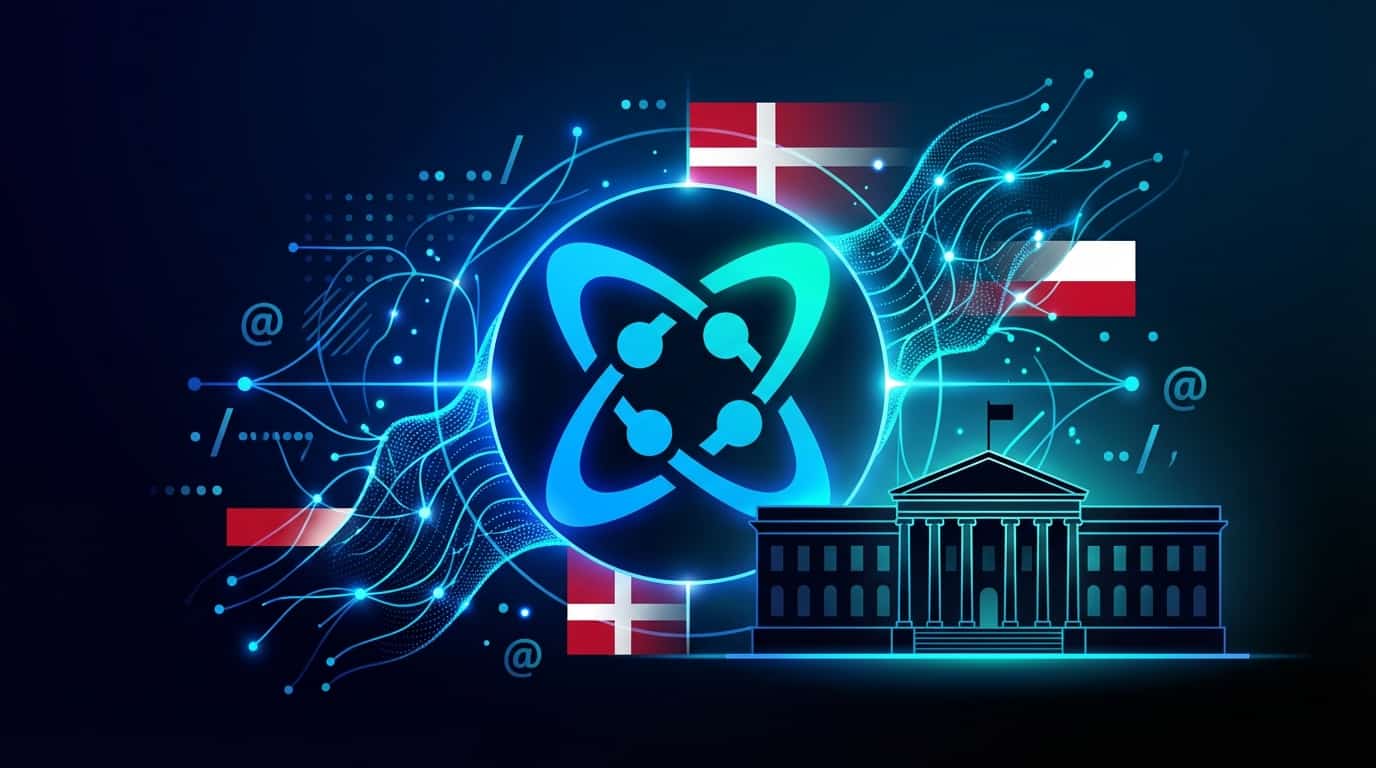
Denmark's Government Agency Moves Away from Microsoft
A Danish government agency announced plans to ditch Microsoft software in favor of alternatives. The move is framed around digital sovereignty and reducing dependence on a single vendor.
European governments have been talking about digital independence for years. What makes this notable is the actual commitment to migrate rather than just study the issue. The challenges are real: retraining staff, ensuring compatibility with external partners, and maintaining security during transition.
For organizations watching this space, Denmark's experience will provide valuable data on whether large-scale Microsoft migrations are practically achievable or remain aspirational.
Join the Hacker News discussion
The Em-Dash Tells on You
A fascinating analysis found that new Hacker News accounts are 10x more likely to use em-dashes than established accounts. The implication: AI-generated content has distinctive stylistic fingerprints.
Em-dashes are a favorite of language models. They appear frequently in training data from published writing and get reproduced at higher rates than typical human typing patterns. This creates a detectable signal for AI-generated text.
For content teams, this is a reminder that AI assistance leaves traces. If authenticity matters for your content strategy, consider how AI-generated text differs stylistically from human writing.
Join the Hacker News discussion
Quick Hits
- Moonshine STT released open-weights speech-to-text models claiming higher accuracy than Whisper Large v3
- Racket v9.1 shipped with updates to the Scheme-based language
- Red Hat enters the desktop container market with enterprise Podman Desktop, taking on Docker Desktop
- GNU TeXmacs continues development as a scientific document editor worth knowing about
- LLM Skirmish launched as a real-time strategy game designed for AI agents to play
What This Means for Content Teams
The em-dash analysis highlights something content teams should consider: AI assistance has detectable patterns. Whether that matters depends on your audience and use case, but awareness is the first step.
Cosmic's AI features include tools for content generation, translation, and automation. The platform gives you control over how AI integrates into your workflow, letting you use assistance where it adds value while maintaining the authentic voice your audience expects.
That's the rundown for today. We'll keep tracking these stories as they develop.