
Tony Spiro
February 26, 2026
The distance between your content and your users has never mattered more. As global audiences expect sub-second load times, the traditional model of serving content from centralized data centers is showing its age. Edge computing represents a fundamental shift in how we architect content delivery, moving computation and caching closer to end users across a distributed global network.
For teams building with headless CMS platforms like Cosmic, understanding edge-first architecture isn't just about performance optimization. It's about rethinking how content flows from creation to consumption in an increasingly distributed world.
What Edge Computing Means for Content Management
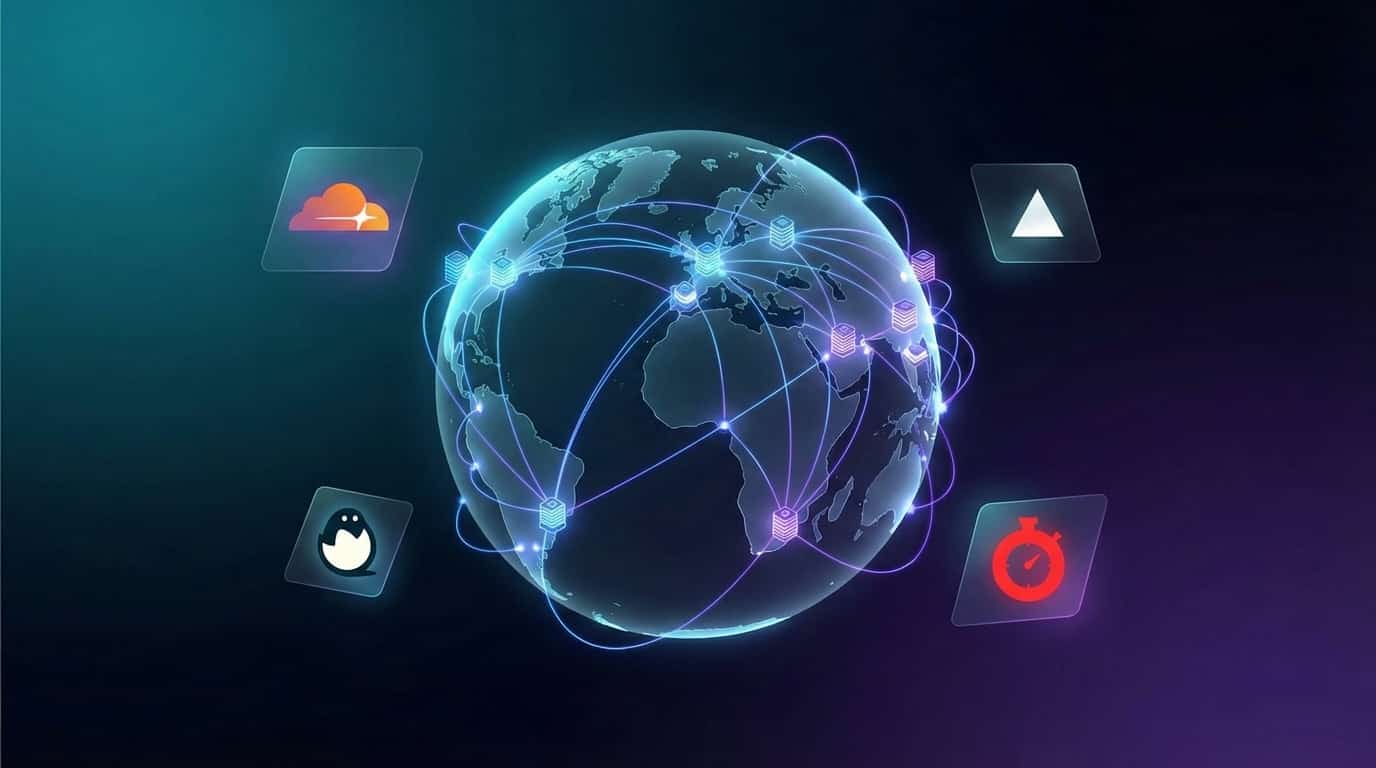
Edge computing moves processing from centralized cloud regions to distributed points of presence (PoPs) located closer to end users. Instead of every request traveling to a single origin server, edge functions intercept requests at the nearest network location and handle them locally.
For content-driven applications, this architecture provides three critical advantages:
Reduced Latency: When a user in Tokyo requests content, an edge function in Tokyo can respond in milliseconds rather than waiting for a round trip to a US-based origin server.
Global Scalability: Edge networks automatically distribute load across hundreds of locations, eliminating single points of failure and handling traffic spikes without manual intervention.
Real-Time Personalization: Edge functions can modify content based on user context, including location, device, and preferences, without adding latency to the request.
The Edge Platform Landscape in 2026
Four major platforms dominate edge computing for web applications, each with distinct strengths for CMS-powered projects.
Cloudflare Workers
Cloudflare operates one of the largest edge networks with over 200 data centers worldwide. Their Workers platform supports JavaScript, TypeScript, Python, and Rust, with first-class integration for frameworks like Next.js, Astro, and React Router.
The platform excels at fullstack applications where edge functions need access to persistent storage. Cloudflare R2 provides S3-compatible object storage at the edge, while KV offers globally distributed key-value storage for session data and configuration.
Vercel Edge Network
Vercel's infrastructure spans 126 Points of Presence across 94 cities in 51 countries, with 20 compute-capable regions where server-side code executes close to data sources. Their architecture balances geographic distribution with concentrated caching resources to maximize cache hit rates.
For Next.js applications, Vercel provides the tightest integration. Edge middleware can rewrite URLs, redirect traffic, and modify responses before they reach the browser, all executing at the nearest PoP. Teams using the Cosmic CLI can deploy directly to Vercel with a single command, making edge-first architecture accessible from the very first deployment.
Deno Deploy
Deno Deploy brings the modern Deno 2.0 runtime to edge computing with full support for both Deno and Node.js applications. The platform reached general availability with first-class support for Next.js, Astro, and SvelteKit.
What sets Deno Deploy apart is its fully integrated build system and separate development/production environment variables. These workflow improvements add up for teams managing multiple environments.
Fastly Compute
Fastly positions itself around the promise of "Instant. Programmable. Global." Their Compute platform emphasizes real-time personalization at scale, using their KV Store and Fanout services to merge dynamic data with content logic at the edge.
For applications requiring millisecond-level personalization, like e-commerce product recommendations or localized content, Fastly's architecture eliminates the traditional trade-off between personalization depth and response time.
Edge vs. Traditional Serverless: Key Architectural Differences
Traditional serverless functions (AWS Lambda, Google Cloud Functions) execute in specific cloud regions. When a user makes a request, it routes to the nearest region, which might still be thousands of miles away.
Edge functions fundamentally change this model:
| Aspect | Traditional Serverless | Edge Functions |
|---|---|---|
| Execution Location | Regional data centers | Global PoPs (200+) |
| Cold Start | 100-500ms typical | <50ms typical |
| Geographic Coverage | 20-30 regions | 100-300+ locations |
| Use Case | Backend processing | Request interception, routing |
For CMS applications, edge functions serve as intelligent middleware. They can:
- Cache API responses at the edge and serve them instantly
- Transform content based on user context before delivery
- Handle authentication and authorization without origin round trips
- Implement A/B testing with zero latency impact
Implementation Patterns for Headless CMS at the Edge
Pattern 1: Edge Caching with Stale-While-Revalidate
The most immediate win for any headless CMS implementation is edge caching. Instead of every visitor triggering an API call to your CMS, edge functions cache responses and serve them instantly while revalidating in the background.
// Example edge middleware pattern
export default async function middleware(request) {
  const cacheKey = new URL(request.url).pathname;
  const cached = await cache.get(cacheKey);

  if (cached) {
    // Serve cached content immediately
    // Revalidate in background
    context.waitUntil(revalidate(cacheKey));
    return new Response(cached);
  }

  // Fetch from CMS origin
  const fresh = await fetchFromCMS(request);
  await cache.put(cacheKey, fresh);
  return new Response(fresh);
}
This pattern reduces CMS API calls by 90% or more while ensuring content stays fresh. Platforms like Cosmic are particularly well suited to this pattern because their REST API returns clean JSON responses that edge caches can store and serve efficiently.
Pattern 2: Geo-Based Content Personalization
Edge functions have access to request geolocation data, enabling content personalization without client-side JavaScript or additional API calls.
export default async function middleware(request) {
  const country = request.geo?.country || 'US';
  const locale = COUNTRY_LOCALE_MAP[country] || 'en-US';

  // Fetch localized content from CMS
  const content = await cms.getContent({
    locale,
    slug: request.url.pathname
  });

  return new Response(content);
}
Cosmic's built-in localization support makes geo-based content delivery straightforward. Content editors can manage locale-specific versions in the dashboard while edge functions handle the routing logic automatically.
Pattern 3: Real-Time Content Assembly
For dynamic pages that combine content from multiple sources, edge functions can assemble responses from cached fragments.
export default async function middleware(request) {
  // Parallel fetch of cached content fragments
  const [header, content, sidebar, footer] = await Promise.all([
    cache.get('header'),
    fetchContent(request.url.pathname),
    cache.get('sidebar'),
    cache.get('footer')
  ]);

  // Assemble at edge, not origin
  return new Response(assemble(header, content, sidebar, footer));
}
This fragment-based approach works especially well with Cosmic's Object types, where shared components like navigation, footers, and sidebars can be cached independently from page-specific content.
Performance Impact: What the Numbers Show
The performance gains from edge-first architecture are substantial and measurable:
- Vercel's 126 PoPs mean most users are within 50ms of an edge location
- Cloudflare's 200+ data centers provide coverage in virtually every major market
- Fastly reports millisecond-level response times for personalized content delivery
For a headless CMS application, this translates to:
- First Contentful Paint improvements of 40-60%
- Time to Interactive reductions of 30-50%
- API response times dropping from 200-500ms to 20-50ms
These improvements directly impact Core Web Vitals scores, search engine rankings, and conversion rates, making edge-first delivery a critical factor in both user experience and SEO performance.
How Cosmic Fits Into Edge Architecture
Cosmic's API-first architecture aligns naturally with edge computing patterns. Content delivered through Cosmic's global CDN is already optimized for edge caching, and the JSON-based API responses work seamlessly with edge function transformation patterns.
When building edge-first applications with Cosmic:
- Leverage the built-in CDN for static asset delivery with Cosmic's 99.9% uptime guarantee across 150+ countries
- Cache API responses at edge locations using your platform's caching layer and Cosmic's REST API
- Use webhooks to invalidate edge caches when content updates, configurable directly from the Cosmic dashboard or through the API
- Transform content at the edge for personalization without origin round trips
- Deploy with a single command using Cosmic's built-in Vercel integration to ship edge-ready applications in minutes
The combination of a headless CMS with edge computing creates a content architecture that's both globally distributed and instantly responsive. Cosmic's AI-powered workflows can further automate content creation and deployment, ensuring your edge caches always have fresh, optimized content to serve.
Getting Started with Edge-First CMS Architecture
For teams ready to adopt edge-first patterns:
- Start with caching: Implement edge caching for your CMS API responses before adding complexity. The Cosmic quickstart guide walks you through setting up your first project and API access.
- Measure baseline performance: Use Real User Monitoring to understand your current latency distribution across your audience's geographic regions.
- Choose your platform: Match platform strengths to your specific requirements. Vercel for Next.js, Cloudflare for multi-language support, and Deno for modern TypeScript workflows all pair well with Cosmic's API.
- Implement incrementally: Add edge functions for specific routes rather than rewriting everything at once. Start with your highest-traffic content pages.
- Automate cache invalidation: Use Cosmic's webhook system to trigger edge cache purges when content editors publish updates, keeping your edge content in sync without manual intervention.
- Monitor and iterate: Edge performance varies by geography. Use analytics to identify optimization opportunities and expand edge coverage where it matters most.
Edge computing isn't just a performance optimization. It's a fundamental rearchitecture of how content flows from your CMS to your users. As global audiences grow and performance expectations increase, edge-first architecture becomes less of a competitive advantage and more of a baseline requirement.
The tools are mature, the platforms are battle-tested, and the patterns are well-established. The question isn't whether to adopt edge computing for your CMS-powered applications, but how quickly you can get there. Start building for free with Cosmic and deploy your first edge-ready application today.