Strapi vs Contentful: Which Headless CMS Should You Choose in 2026?

Tony Spiro
August 4, 2026
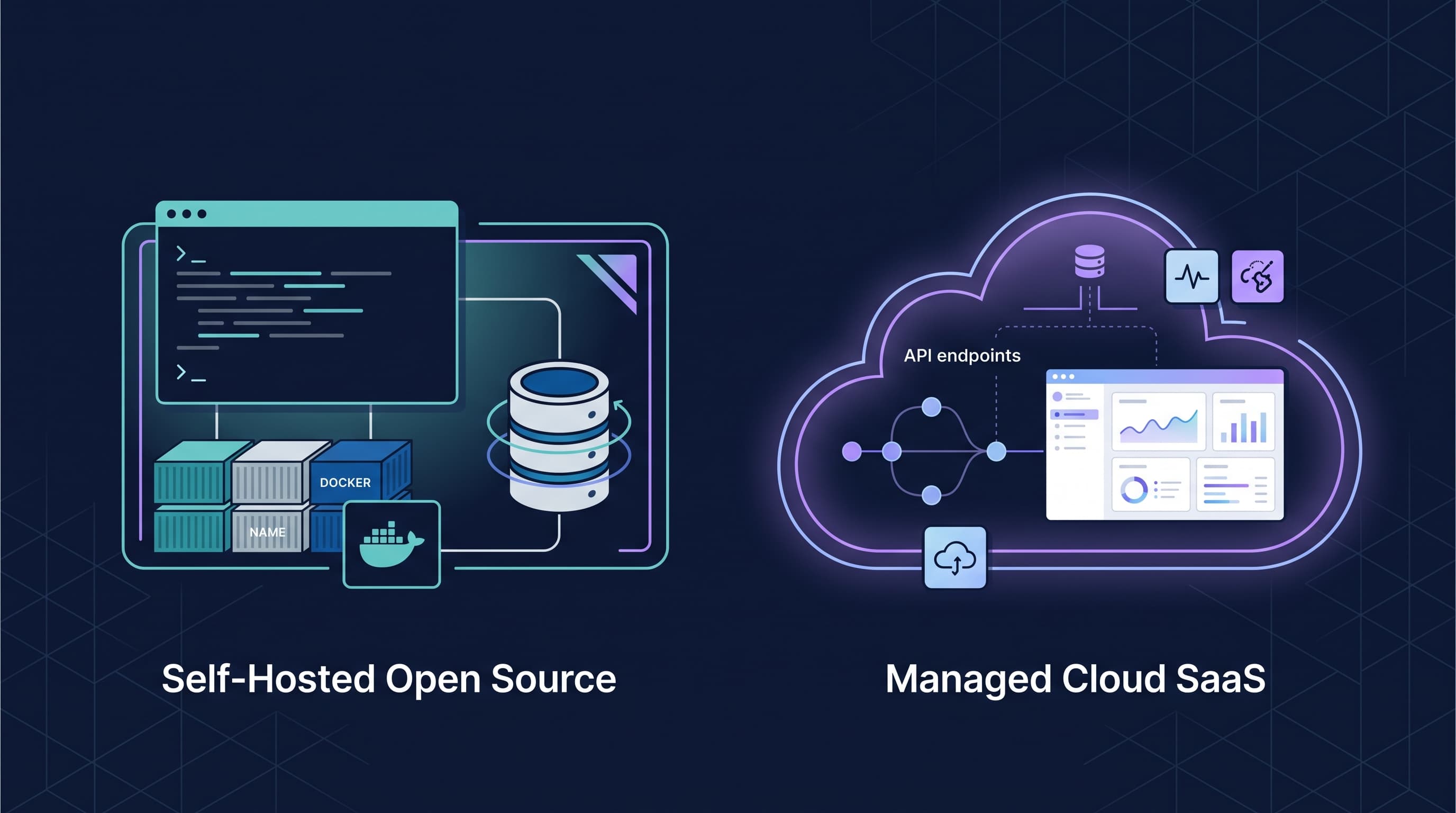
Choosing between Strapi and Contentful is a decision about who operates your CMS. Strapi is an open source Node.js application that you run on your own infrastructure, or on Strapi Cloud. Contentful is managed SaaS, where the API, the database, the CDN, and the on-call rotation belong to the vendor.
Both are mature products running real production workloads. They fail in different places, and those failure modes should drive your decision more than any feature checklist.
One note on method before we start. Every vendor claim below was checked against each company's own pricing and documentation pages on August 3, 2026. Where a vendor does not publish a number publicly, this post says so rather than guessing. Pricing on developer tools changes often, so treat the linked pricing pages as the source of truth on the day you read this.
Quick verdict
| Strapi | Contentful | |
|---|---|---|
| Delivery model | Open source, self-hosted, or managed on Strapi Cloud | Managed SaaS only |
| Where content lives | Your database (PostgreSQL, MySQL, SQLite) | Contentful's infrastructure |
| Content APIs | Auto-generated REST plus a GraphQL plugin | Content Delivery, Content Management, Preview, and GraphQL APIs |
| Schema changes | Defined in code, committed to your repo | Defined in the web app or via API, promoted through environments |
| Upgrades, patching, backups | Yours to own when self-hosted | Handled by the vendor |
| Custom server logic | First class, you write controllers, services, and plugins | Constrained to apps, functions, and webhooks |
| Governance and SSO | Paid and enterprise tiers | Higher tiers |
| Best fit | Teams that want the data layer and schema under their control | Teams that want zero infrastructure and enterprise governance |
1. The architecture difference that decides most evaluations
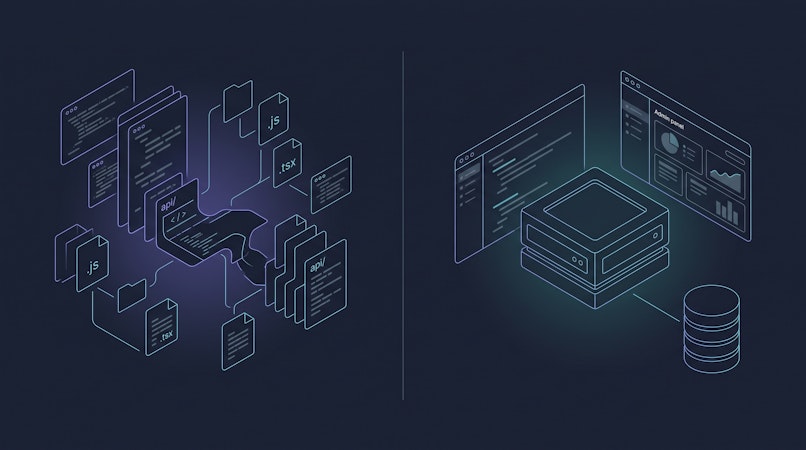
Strapi is a Node.js application. You generate it, model your content in code, connect a database, and deploy it like any other service you run. That means your content sits in a database you can query directly, back up on your own schedule, and host in whatever region compliance requires. It also means the upgrade path, the security patching, the connection pooling under traffic spikes, and the 2am page all belong to your team. Strapi Cloud exists to absorb some of that operational load in exchange for a per-project monthly fee.
Contentful inverts the tradeoff. There is nothing to deploy and nothing to patch. Content lives in spaces, schema and content move between environments, and delivery reads come off a CDN-backed API. In return you accept documented platform limits (records per space, API rate limits, fields per content type, locales) and you cannot reach into the database when something unusual is required. Check Contentful's technical limits documentation against your actual content model before you commit, because model shape is where teams hit walls first.
A useful way to frame it: Strapi gives you extension points at the cost of operational surface area. Contentful removes the operational surface area at the cost of extension points.
2. Content modeling and the editor experience
Strapi keeps content types in schema files inside your repository. Modeling changes flow through pull requests, code review, and CI, which is excellent when engineering owns the model and wants it versioned alongside application code. The tradeoff shows up when a marketer needs a new field on Friday afternoon and the change requires a deploy.
Contentful models content in the web app. An editor or content ops lead can add a field, set validations, and publish without a deploy, then promote the change from a sandbox environment to production. Teams with real content operations staff tend to prefer this. Teams that want the model to be reproducible from source control tend to resist it.
Neither approach is universally correct. The question to answer honestly is who in your organization will be changing the content model six months from now, and whether that person writes code.
3. APIs and developer experience
Strapi generates REST endpoints from your content types and offers GraphQL through a plugin. Because it is your application, you can add middleware, override controllers, and write business logic that lives next to the content layer. That power is real, and so is the maintenance: custom code inside the CMS is code you now maintain across Strapi major versions.
Contentful separates read and write paths. The Content Delivery API is read-optimized and CDN-backed, the Content Management API handles writes, and a Preview API serves drafts. There are official SDKs, webhooks, an app framework for extending the editor UI, and GraphQL support. You integrate against a stable platform instead of shaping the platform to your needs.
If your team is building on Next.js, Nuxt, or Astro, both platforms will work fine. The practical differences land in webhook reliability for on-demand revalidation, preview ergonomics, and how quickly a new developer can go from repo clone to rendering content.
4. Cost structure matters more than list price
Comparing sticker prices on these two products produces the wrong answer, because the cost lives in different buckets.
Strapi self-hosted. The license is free and open source. Running it in production carries real cost: application hosting, a managed database, object storage and a CDN for assets, monitoring, plus engineering hours for upgrades and incident response. That last line is the one teams underestimate. Strapi Cloud converts part of it into a predictable per-project monthly fee with allowances for API requests, storage, and bandwidth, with published overage rates once you exceed them. Current tiers and figures are on Strapi's cloud pricing page and CMS pricing page.
Contentful. You pay a subscription plus usage. There is a free tier for evaluation, a self-serve paid tier, and Premium plans quoted by their sales team. Contentful does not publish enterprise list pricing, so budget for a procurement cycle rather than a checkout page. Their current tiers are at contentful.com/pricing.
Seats are a real line item on both. Each platform includes a limited number of users and charges for more. Any comparison that ignores team size will understate the three-year cost on either side.
For a concrete point of reference, here is Cosmic's published pricing as of today, verified on our own pricing page:
| Plan | Price | Buckets | Team members | Objects |
|---|---|---|---|---|
| Free | $0/month | 1 | 2 | 1,000 |
| Builder | $99/month | 2 | 3 | 5,000 |
| Team | $299/month | 3 | 5 | 20,000 |
| Business | $499/month | 5 | 10 | 50,000 |
| Enterprise | Custom | Custom | Custom | Custom |
Additional users are $29/user/month on Cosmic. We publish that number because hidden seat math is how CMS budgets get blown in year two.
5. Governance, roles, and compliance
Both platforms gate the features enterprises require behind upgrade tiers. Strapi offers role based access control and SSO in its paid and enterprise editions. Contentful layers roles, permissions, SSO, and SCIM provisioning onto higher plans. If your security review requires SSO, scoped permissions, and audit visibility, price the tier that actually includes those features, because the entry tier you began your evaluation on very likely does not.
Data residency is where the two genuinely diverge. Self-hosted Strapi lets you place the database wherever your compliance regime demands. With Contentful, residency is a platform and contract question you negotiate.
6. Where AI has actually landed in 2026
This is the fastest moving part of the comparison, so keep the claims narrow.
Strapi has been shipping toward agent and assistant workflows, including a Model Context Protocol server so AI clients can talk to a Strapi project. Contentful offers AI Actions inside the app for content transformation tasks such as translation, summarization, and tone adjustment.
Cosmic took a different path. AI agents run inside your bucket and do the work: creating and updating content objects, generating copy and images, and executing multi step content jobs on a schedule. There is a meaningful gap between an assistant that suggests text in a field and an agent that ships a finished draft into your content model.
Choose Strapi if
- Compliance or data residency requires content in a database you control
- You need substantial custom server logic living next to the content layer
- Your team wants the content model versioned in git and promoted through CI
- You already operate Node services and have the ops capacity to absorb one more
Choose Contentful if
- You want zero infrastructure ownership and are willing to pay for it
- You are an enterprise with procurement, SSO, SCIM, and audit requirements
- You run many brands or locales and need mature governance and environments
- Your content team, rather than your engineering team, owns the content model day to day
A third option worth ten minutes
Most teams evaluating Strapi against Contentful are trying to reconcile two things: they want developer speed and they do not want to run a CMS. That is the space Cosmic was built for.
Cosmic is fully managed, so there is no server to patch and no database to scale. Content modeling happens in a UI that non-developers can use without a deploy. Delivery is a REST API with an official TypeScript SDK, and AI agents are built into the platform itself. We are a Y Combinator W19 company and have been shipping this product for years.
Fetching content looks like this:
import { createBucketClient } from '@cosmicjs/sdk';

const cosmic = createBucketClient({
  bucketSlug: process.env.COSMIC_BUCKET_SLUG!,
  readKey: process.env.COSMIC_READ_KEY!,
});

const { objects: posts } = await cosmic.objects
  .find({ type: 'posts' })
  .props(['title', 'slug', 'metadata'])
  .depth(1);
That is the whole integration for a blog index. No schema files to commit and no admin app to deploy. Cosmic offers the REST API and the JavaScript and TypeScript SDK, and we do not offer GraphQL, which is worth knowing up front if a GraphQL requirement is non negotiable for your stack.
On the editorial side, here is how one customer describes the outcome:
"Cosmic is: us never having to ask a developer to change anything on the backend of our website."
Maximilian Wuhr, Co-Founder at FINN
If you want the wider field, we maintain a headless CMS comparison covering Cosmic, Contentful, Strapi, Sanity, Prismic, and Hygraph, and a focused Cosmic vs Contentful breakdown.
FAQ
Is Strapi really free?
The Community edition license is free and open source. Production hosting is a separate bill: servers, a database, asset storage, monitoring, and engineering time. Strapi's paid tiers and Strapi Cloud add features and managed hosting for a subscription fee.
Does Contentful have a free plan?
Yes. Contentful offers a free tier suitable for evaluation and small projects, with paid tiers above it and Premium plans quoted by sales. Check their pricing page for current limits.
Which one is better for Next.js?
Both work well with the App Router. Strapi gives you more control over the API response shape because you can customize controllers. Contentful gives you a CDN-backed read API and a mature webhook system for on-demand revalidation. Your deciding factor will more likely be operations and cost than framework support.
Can I migrate away later?
Yes, in both directions. Strapi content lives in your database and can be exported directly. Contentful provides management APIs and export tooling. Plan for the schema mapping work, because that is the expensive part of any CMS migration, well ahead of the data transfer itself.
Does Cosmic support GraphQL?
No. Cosmic provides a REST API and an official JavaScript and TypeScript SDK. If GraphQL is a hard requirement, that is a legitimate reason to look elsewhere.
Make the call
If you want control of the data layer and have the ops capacity, Strapi is a strong choice. If you want managed infrastructure and enterprise governance and can fund it, Contentful earns its place. If neither tradeoff feels right, that is a signal worth acting on.
Start building on Cosmic for free and have content live in an afternoon, or book 20 minutes with our CEO to talk through your migration before you commit to anything.