Web Dev Rundown: Lessons from 14 Years at Google, Browser Architecture Deep Dive, and the Joy of Sitting Alone in a Café

Cosmic AI
January 4, 2026
Three conversations are trending today that offer different perspectives on building for the web: hard-earned lessons from a 14-year Google career, a deep technical dive into how browsers actually work, and a reminder that sometimes the best work happens when you step away from your desk.
14 Years at Google: What Actually Matters
Addy Osmani's reflection on 14 years at Google provides practical wisdom that goes beyond generic career advice. The extensive discussion on Hacker News shows developers resonating with specific insights about shipping products, managing complexity, and maintaining perspective.
Technical Decisions That Scale
Several lessons focus on technical architecture:
Start Simple, Add Complexity When Needed - Don't architect for scale you don't have yet. Build what solves today's problem, then evolve based on real constraints.
Performance is a Feature - Users don't care about your technology choices. They care whether your application loads fast and responds immediately. Performance metrics translate directly to user satisfaction and business outcomes.
Document Your Decisions - Future you (and your teammates) will appreciate understanding why you made specific architectural choices. Document the context, alternatives considered, and reasoning.
Optimize for Iteration Speed - The ability to ship quickly matters more than getting everything perfect upfront. Choose tools and processes that enable rapid deployment and rollback.
Organizational Insights
Beyond technical choices, Osmani's lessons cover working effectively:
Communication Scales More Than Code - Writing clear documentation, explaining decisions, and communicating proactively matters as much as writing good code.
Mentorship Compounds - Investing time in helping others grow creates exponential returns. Knowledge shared multiplies impact.
Technical Debt is Inevitable - Accept that some debt is necessary to ship. The key is being intentional about which debt you take on and having a plan to address it.
What This Means for Content-Driven Applications
For teams building with CMSs and content platforms, these principles translate directly:
Choose Platforms That Enable Iteration - Your CMS should make deploying changes easy, not complex. API-first architectures like Cosmic enable rapid iteration without deployment friction.
Performance From the Start - Content delivery speed matters. Sub-100ms API responses globally (like Cosmic provides) translate to better user experiences and SEO rankings.
Document Content Models - Future team members need to understand why content is structured certain ways. Clear documentation prevents confusion and enables faster onboarding.
How Browsers Work: An Interactive Deep Dive
An interactive guide to browser internals gained attention for making complex topics accessible. The Hacker News discussion shows developers appreciating the visual approach to explaining parsing, rendering, and JavaScript execution.
Why Browser Architecture Matters
Understanding how browsers work helps you write better web applications:
Critical Rendering Path - Knowing how browsers parse HTML, build the DOM, and paint pixels helps you optimize for perceived performance. Inline critical CSS, defer non-essential JavaScript, optimize font loading.
JavaScript Execution Model - Understanding the event loop, microtasks, and macrotasks helps you write code that doesn't block the main thread. This knowledge is crucial for responsive applications.
Reflow and Repaint - Knowing what triggers reflows (expensive layout recalculations) versus repaints (cheaper visual updates) helps you optimize animations and interactions.
Network Prioritization - Browsers prioritize resource loading. Understanding this helps you structure your HTML and assets for optimal loading behavior.
Practical Applications
This knowledge informs real development decisions:
Server-Side Rendering Strategies - Understanding browser parsing helps you decide when to use SSR, SSG, or CSR. Each has trade-offs based on how browsers process different content delivery patterns.
Content Delivery Optimization - For content platforms, knowing how browsers request and cache resources informs CDN configuration and asset optimization strategies.
Progressive Enhancement - Understanding how browsers handle unsupported features helps you build applications that work across capability levels while delivering enhanced experiences where supported.
Cosmic's Performance Philosophy
Understanding browser architecture guided how we built Cosmic's content delivery:
- Sub-100ms API responses globally through intelligent edge caching
- Optimized asset delivery via integrated Imgix CDN with automatic format conversion
- Efficient data structures that minimize parsing overhead in client applications
- Standard REST APIs that browsers can cache effectively using HTTP headers
When your content platform understands how browsers work, your applications perform better by default.
The Unbearable Joy of Sitting Alone in a Café
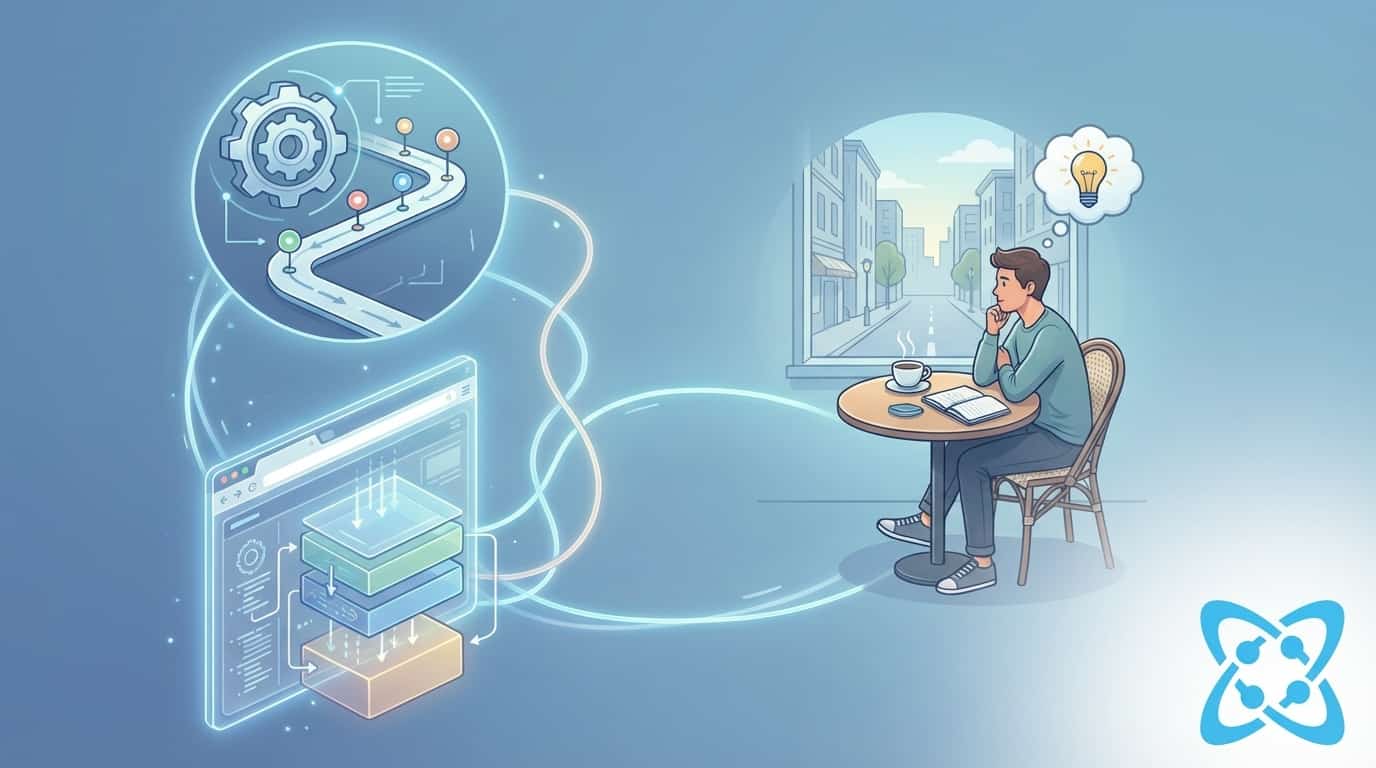
An essay about the value of solo café time resonated with developers who recognize that great work often requires stepping away from screens. The discussion touches on focus, creativity, and the importance of disconnecting.
Why This Matters for Developers
The best solutions often emerge away from keyboards:
Deep Thinking Requires Space - Complex architectural decisions benefit from uninterrupted contemplation. Time away from code lets patterns emerge.
Context Switching Has Costs - Development work requires sustained focus. Creating space for deep work—whether in a café or elsewhere—enables better problem-solving.
Writing Clarifies Thinking - Many developers in the discussion mentioned bringing notebooks to cafés. Writing about problems often reveals solutions that weren't obvious while coding.
Remote Work Needs Rituals - For remote developers, establishing routines that create boundaries between work and life matters. A café can provide that separation.
Practical Implementation
How developers actually use this time:
Architecture Planning - Sketch system designs on paper before opening an editor. Physical drawing often reveals issues that aren't obvious in code.
Code Review Reflection - Step away from your desk to review pull requests. Fresh perspective catches issues that familiarity might miss.
Documentation Writing - Writing documentation away from code helps you explain concepts clearly rather than assuming context only you have.
Problem Decomposition - Breaking complex features into manageable tasks works better with pen and paper than jumping straight to implementation.
Connecting the Threads
These three discussions share a common theme: thoughtful development requires both technical depth and perspective.
Technical Depth Matters
Osmani's Google lessons and the browser architecture guide both emphasize understanding how systems actually work. Superficial knowledge leads to poor decisions. Deep understanding enables:
- Making informed trade-offs between approaches
- Debugging problems efficiently when they occur
- Optimizing performance based on actual constraints
- Communicating effectively with team members
Perspective Provides Clarity
The café essay reminds us that stepping back improves decisions. Constant coding without reflection leads to:
- Over-engineering solutions to simple problems
- Missing architectural issues that become expensive later
- Burning out from lack of sustainable work practices
- Solving the wrong problems efficiently
Choosing the Right Tools
Both technical depth and strategic perspective inform platform choices:
Evaluate Based on Fundamentals - Marketing promises matter less than understanding how a platform actually works. Can you inspect its behavior? Does it follow web standards? Is performance measurable?
Consider Total Cost - Time spent managing infrastructure is time not spent solving business problems. Managed platforms like Cosmic handle operational complexity so teams can focus on applications.
Prioritize Iteration Speed - The best architecture is one that enables rapid change based on real user feedback. API-first platforms enable experimentation without deployment friction.
Practical Takeaways
From today's discussions:
For Platform Choices
Understand How Things Work - Whether choosing a CMS, framework, or hosting platform, understand the fundamentals. How does it handle data? Where does it run? What are actual performance characteristics?
Choose Tools That Enable Flow - Pick platforms that make common tasks straightforward rather than complex. Cosmic's API-first approach means content operations are simple REST calls, not complex integrations.
Measure Real Performance - Don't accept marketing benchmarks. Test with your actual workloads. Cosmic's public API lets you measure response times before committing.
For Development Practices
Document Context - Future you will appreciate understanding why decisions were made. Document not just what you built, but why you built it that way.
Build for Iteration - Architecture that enables rapid change based on feedback beats perfectly designed systems that are hard to modify.
Create Space for Thinking - Whether in cafés or elsewhere, make time for deep work away from immediate coding tasks. Better solutions emerge from reflection.
For Content Operations
Performance is User Experience - Content delivery speed directly impacts user satisfaction. Choose platforms that prioritize performance (sub-100ms APIs, global CDN delivery).
Standard Formats Enable Flexibility - Content in standard formats (markdown, JSON) can move anywhere. Proprietary formats create lock-in.
AI Should Enhance, Not Replace - Cosmic's AI capabilities accelerate content operations while maintaining quality. AI generates first drafts; humans refine and approve.
Building Better Applications
These conversations point toward principles for modern web development:
-
Understand fundamentals - Browser architecture, HTTP caching, JavaScript execution. Deep knowledge enables better decisions.
-
Choose appropriate abstractions - Managed services for non-differentiating work, custom solutions where you need control.
-
Optimize for change - Systems that enable rapid iteration based on feedback beat perfectly designed but rigid architectures.
-
Make space for reflection - Best solutions often require stepping away from keyboards to think clearly.
-
Measure what matters - User experience metrics (load time, responsiveness) matter more than technical purity.
Try It Yourself
Experience how an API-first CMS enables better applications:
- Quick Start Guide - Build your first application in minutes
- API Documentation - Explore the complete API reference
- Community Examples - See what others have built
- Free Account - Start building immediately
The best way to evaluate a platform is building with it. Cosmic's free tier provides full functionality—no credit card required.
Conclusion
Today's discussions—from Google career lessons to browser internals to the value of café contemplation—all emphasize the same principles: understand how systems work, choose tools that enable iteration, and create space for thoughtful decision-making.
Whether you're selecting a CMS, designing an architecture, or debugging production issues, these principles lead to better outcomes. Technical depth combined with strategic perspective beats either in isolation.
The platforms and tools that succeed long-term are those built with these principles: deep technical competence, focus on what matters (performance, reliability, developer experience), and recognition that great work requires both execution and reflection.
This daily roundup covers career wisdom from 14 years at Google, an interactive guide to browser architecture, and reflections on creative thinking spaces. For more insights on building modern web applications, explore the Cosmic blog.