
Tony Spiro
July 20, 2026
The phrase "agent-native" is everywhere right now. Builder.io published a post on it. Vendors are appending it to product descriptions. It is becoming the new "AI-powered", a term that sounds meaningful until you realize everyone is using it to mean something slightly different.
So let's be direct about what agent-native content infrastructure actually requires, where most tools fall short, and what it looks like when an AI agent genuinely operates inside your content stack.
What the term is supposed to mean
Builder.io's framing is worth engaging with honestly, because parts of it are correct. The core idea: an AI agent that works beside your content (generating copy in a chat window that a human then pastes somewhere) is less useful than an agent that works inside your content system (reading, writing, publishing, and routing for approval directly in the actual CMS).
That distinction is real and important. Agents that only produce text blobs for humans to manually process are not materially different from autocomplete. The value compounds when the agent can take action on the real asset, leave a record, and hand off to a human checkpoint before anything ships.
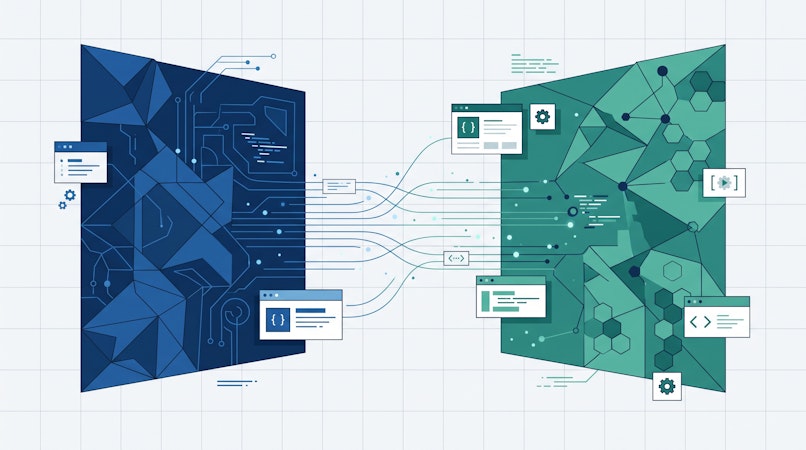
Where the framing gets slippery is in what counts as "inside the system." Having an agent that can drop text into a page builder component is not the same as having an agent that operates across your full content model, respects your permissions structure, publishes via your API, and routes through your editorial workflow.
What most CMS vendors actually ship
When most CMS vendors say "AI," they mean one or more of these:
- A text generation button inside the editor (autocomplete with a better model)
- An AI field that suggests values based on other field content
- A chatbot interface that answers questions about your content
- An integration with a third-party AI writing tool
None of these are agents. They are AI-assisted editing features. Useful, but categorically different from an agent that can receive a natural-language instruction, reason about your content model, take a series of actions, and complete a multi-step content task autonomously.
The test Builder.io correctly identifies: can the agent act on the actual asset, through real permissions, leaving a trail the team can inspect?
Very few CMS platforms pass that test. Cosmic does, and you can see the shipped feature set on our CMS with AI agents page.
What Cosmic AI Agents actually do
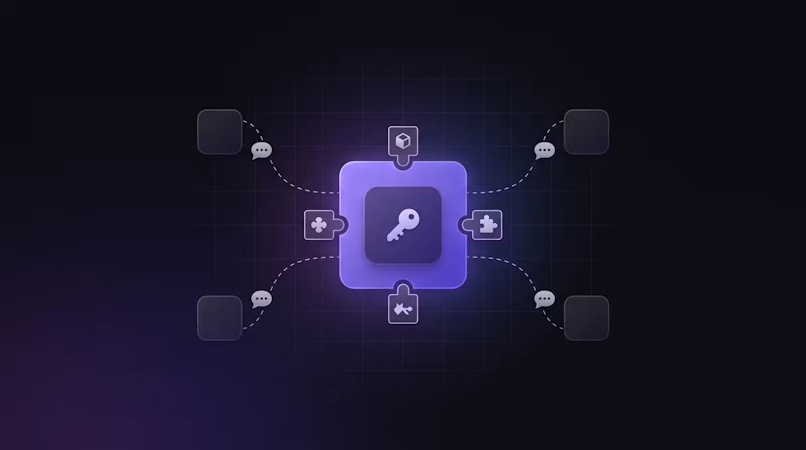
Cosmic ships AI Agents that operate directly in your bucket via Slack, WhatsApp, and Telegram. They are not a chat window beside your CMS. They are agents that have authenticated access to your content via the Cosmic API, reason about your object types and schema, and take real actions.
Here is what a Cosmic AI Agent can actually do in a single instruction:
- Read your existing content objects and understand their structure
- Create, update, or delete objects using your real content model
- Schedule content for future publishing
- Search across your bucket using semantic search
- Generate images via the built-in media library
- Route drafts for human review before publishing
- Trigger multi-step Workflows across agents
This is not an aspirational roadmap. These are the current, shipped capabilities available today on the Free plan and above. If you want to see the configuration behind a setup like this, the Build an AI Agent Team That Ships Content lesson walks through defining multiple agents with distinct roles and putting a human review gate between them.
import { createBucketClient } from '@cosmicjs/sdk';

const cosmic = createBucketClient({
  bucketSlug: 'your-bucket-slug',
  readKey: 'your-read-key',
  writeKey: 'your-write-key',
});

// An agent can create a structured object directly via the API
const { object } = await cosmic.objects.insertOne({
  title: 'New Product Launch Post',
  type: 'blog-posts',
  status: 'draft',
  metadata: {
    content: 'Draft body from agent...',
    author: 'cosmic-intelligence',
  },
});
The agent writes to your real content model, in your real bucket, via the same authenticated API your frontend reads from. The draft sits in your CMS for a human editor to review before it ever goes live.
The permissions and safety layer
This is the part that most "agent-native" marketing skips over, and it is actually the hard part.
An agent that can write to your CMS without boundaries is not a feature. It is a liability. What makes agent-native content infrastructure production-ready is the control layer:
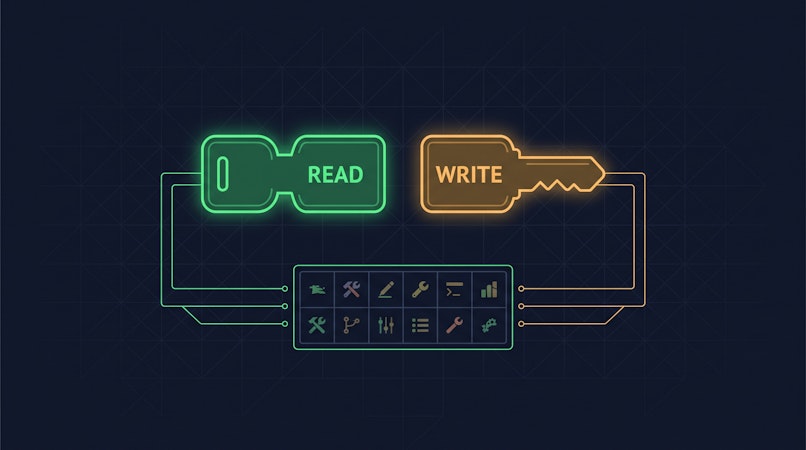
- Scoped API keys. Cosmic agents operate with read/write keys that can be scoped to specific buckets. An agent cannot touch buckets it has not been authorized for.
- Draft-by-default. Agents create content as drafts. Nothing publishes without a human approval step unless you explicitly configure it otherwise.
- Full audit trail. Every object creation, update, and publish action is logged in the CMS with a timestamp and actor record. The team can see exactly what the agent did.
- Workflow checkpoints. Cosmic Workflows let you chain agent steps with human review gates between them. An agent can draft, another can edit, a human approves, and then it publishes.
- Role-based access. The same permissions model that governs human editors applies to agents. You define what they can touch.
This is the answer to the concern that HN threads on AI agent safety keep surfacing: agents do not need unrestricted access to be useful. They need scoped, auditable access. That is what Cosmic's architecture gives you.
The content model advantage
One thing that rarely gets discussed in the agent-native conversation: structured content models are a prerequisite for agents to do useful work.
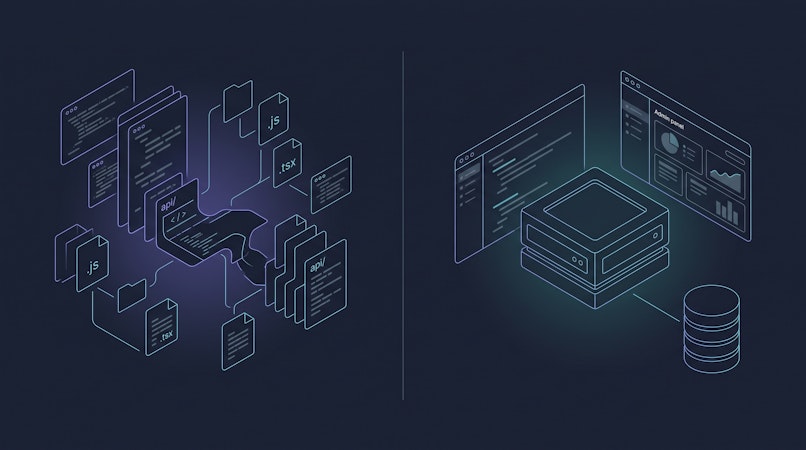
An agent working inside a page builder that stores everything as a blob of visual components has no semantic understanding of what it is editing. It can move blocks around or swap copy, but it cannot reason about your content as data.
A headless CMS with a well-defined content model gives agents something to work with. They know that a blog-posts object has a title, markdown_content, author, categories, and seo_title. They can populate each field with the right type of content, validate against your schema, and produce objects that are immediately usable by your frontend, your search index, and your other agents.
Structured content is the foundation that makes agent-native workflows durable rather than brittle.
What to actually look for
If you are evaluating whether a CMS is genuinely agent-ready, ask these questions:
- Can an agent create and update content objects via a real, authenticated API, or only via a visual editor?
- Does the platform ship agents today, or is it on the roadmap?
- Are agents scoped by permission, or do they have unrestricted bucket access?
- Is there an audit trail for every agent action?
- Can agents trigger multi-step workflows with human approval gates?
- Does the agent work with your actual content model, or with a generic text/blob interface?
Cosmic's answer to all six is yes, today, on every paid plan, with a free tier that includes one agent to start.
The practical starting point
If you want to see what this looks like in practice, the fastest path is to connect a Cosmic AI Agent to your Slack workspace and give it a task: "Draft a blog post about our latest product update and save it as a draft for review."
The agent reads your content model, creates the object, sets the status to draft, and posts the CMS link back to your Slack channel. Your editor reviews it in the Cosmic dashboard, makes edits, and publishes. No copy-paste, no manual field mapping, no context lost between the chat window and the CMS.
That is what agent-native content infrastructure looks like when it is working.
Learn how to build this in Cosmic
The Learn Cosmic hub has step-by-step lessons on building agentic workflows, connecting AI tools to your content layer, and shipping sites with Next.js, Astro, and more.
Get started free or book a demo with Tony to see the agent workflow live.
Give your AI agents a content backend they can write to
Structured, versioned content objects, a REST API and TypeScript SDK, and an MCP server your coding agent connects to directly. The Free plan includes 1 Bucket, 1,000 Objects, and 1 agent. No credit card required.