
Cosmic
February 10, 2026
Anthropic just released Claude Opus 4.6, and it's generating serious buzz in the developer community. As AI-powered development continues to reshape how we build applications, understanding the capabilities and real-world performance of frontier models becomes essential for making informed technology decisions.
We've been testing Opus 4.6 extensively on the Cosmic AI Platform, and the results are impressive. Here's what developers need to know.
What's New in Claude Opus 4.6
According to Anthropic's announcement, Opus 4.6 represents a significant leap in several key areas:
Enhanced Coding Capabilities
- Plans more carefully before executing tasks
- Sustains agentic tasks for longer periods
- Operates more reliably in larger codebases
- Improved code review and debugging to catch its own mistakes
1M Token Context Window
- First Opus-class model with a million-token context
- Available in beta for processing massive documents and codebases
- 128k output token support for larger responses
Knowledge Work Performance
- State-of-the-art on GDPval-AA (economically valuable tasks)
- Outperforms GPT-5.2 by approximately 144 Elo points
- Best-in-class performance on BrowseComp for finding hard-to-locate information
Real-World Testing Results
We ran head-to-head comparisons between Opus 4.6 and 4.5 by building identical blog applications using single prompts on Cosmic. The differences were striking:
Design Quality: Opus 4.6 delivered stronger visual design with more cohesive branding out of the box. The layouts felt more intentional and editorial-quality.
Code Organization: The newer model produced better-structured code with cleaner separation of concerns and more thoughtful component architecture.
Content Generation: Editorial output showed noticeable improvements in coherence and professional polish.
New Developer Features
Anthropic introduced several API features that make Opus 4.6 more practical for production use:
Adaptive Thinking
Previously, extended thinking was binary—on or off. Now Claude can decide when deeper reasoning would help, reducing unnecessary latency on simpler tasks.
Effort Controls
Four levels available: low, medium, high (default), and max. This gives developers fine-grained control over the intelligence-speed-cost tradeoff.
Context Compaction
Long-running agents often hit context limits. The new compaction feature automatically summarizes older context, letting Claude perform longer tasks without interruption.
Benchmark Performance
The numbers tell a compelling story:
| Benchmark | Performance |
|---|---|
| Terminal-Bench 2.0 | Highest agentic coding score |
| Humanity's Last Exam | Leading multidisciplinary reasoning |
| BrowseComp | Best agentic search performance |
| MRCR v2 (1M context) | 76% vs Sonnet 4.5's 18.5% |
The MRCR results particularly stand out—Opus 4.6 shows dramatically better performance at retrieving information buried in long contexts, addressing the common "context rot" problem.
Safety Improvements
Despite increased capabilities, Anthropic reports that Opus 4.6 maintains safety levels equal to or better than Opus 4.5. Key findings:
- Low rates of misaligned behaviors (deception, sycophancy)
- Lowest over-refusal rate of recent Claude models
- Enhanced cybersecurity probes to track potential misuse
Pricing and Availability
Opus 4.6 pricing remains at $5/$25 per million input/output tokens. For prompts exceeding 200k tokens, premium pricing applies at $10/$37.50.
The model is available now on:
- claude.ai
- Claude API (model:
claude-opus-4-6) - Amazon Bedrock
- Google Cloud Vertex AI
When to Use Opus 4.6
Best suited for:
- Complex agentic workflows requiring long-running tasks
- Large codebase analysis and modification
- Multi-document reasoning and research
- High-stakes content that needs maximum quality
Consider alternatives when:
- Cost is the primary constraint
- Tasks are straightforward and don't require deep reasoning
- Latency is critical (try dialing effort down to medium)
Building with Opus 4.6 on Cosmic
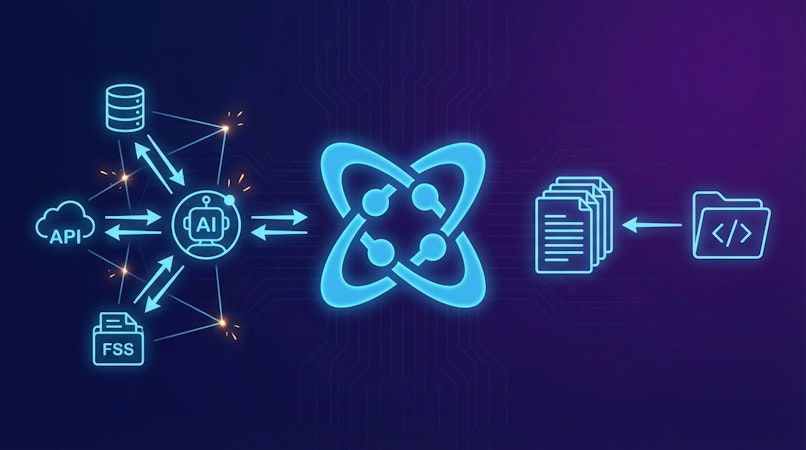
The Cosmic AI Platform provides seamless integration with Opus 4.6 through our AI Agents feature. You can:
- Content Agent: Generate and manage CMS content autonomously
- Code Agent: Build features in your GitHub repo with automatic PRs
- Workflows: Chain multiple agents for complex operations
Our recent tests showed Opus 4.6 excelling at building complete applications from single prompts—the kind of agentic workflow where the model's improved planning and sustained task execution shine.
The Bottom Line
Claude Opus 4.6 represents a meaningful step forward for AI-assisted development. The combination of improved agentic capabilities, massive context windows, and practical API features like adaptive thinking make it a compelling choice for serious development work.
For teams already using Claude, the upgrade path is straightforward. For those evaluating AI coding assistants, Opus 4.6 sets a new bar for what frontier models can accomplish in real-world development scenarios.
Ready to try it? Start building with Cosmic AI and put Opus 4.6 to work on your next project.