Sanity vs Strapi: Which Headless CMS Should You Choose in 2026?

Tony Spiro
August 5, 2026
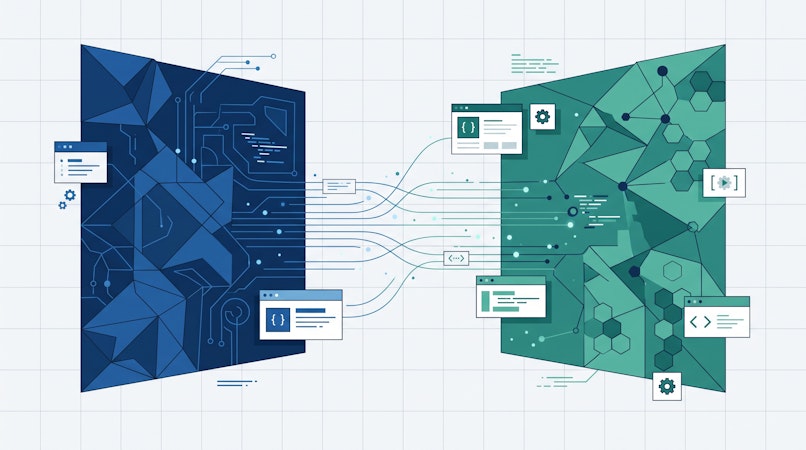
Sanity and Strapi both call themselves headless, both let you define schemas in code, and both have large developer followings. They answer a different question underneath.
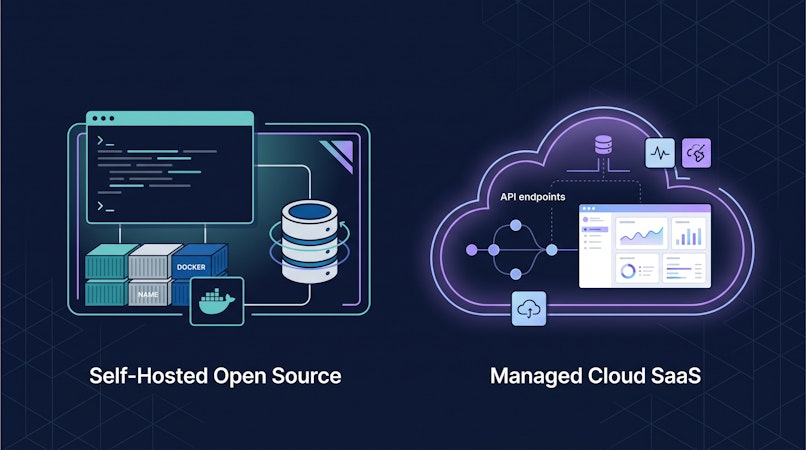
Sanity gives you a hosted content database, the Content Lake, with an open source editing environment on top. Strapi gives you a Node.js application under the MIT license that you run yourself, or pay Strapi Cloud to run for you.
That one architectural fork decides your query language, your upgrade path, your compliance story, your AI options, and your bill. This comparison walks through each of those with numbers verified against both vendors' live pricing pages on August 5, 2026.
TL;DR
| Sanity | Strapi | |
|---|---|---|
| Model | Hosted content platform (Content Lake) | Open source Node.js app, MIT licensed |
| Who operates it | Sanity | You, or Strapi Cloud |
| Query API | GROQ and GraphQL over HTTP, JS client | REST and GraphQL from your own instance |
| Database | Managed, no direct access | Postgres, MySQL, or MariaDB that you own |
| Editing UI | Sanity Studio, an open source React app you deploy | Bundled admin panel |
| Entry price | Free plan, up to 20 seats, 10k documents | Community edition, free forever, unlimited entries |
| Seat cost | $15/seat/month on Growth | $15/seat/month on Growth, 3 seats included |
| Hosting cost | Included | Yours to pay, or $35 to $450 per project per month on Cloud |
| Governance extras | Comments, tasks, scheduled publishing on Growth; audit trail and SSO on Enterprise | Content History and Releases on Growth; Review Workflows and Audit Logs on Enterprise |
| Best fit | Teams that want structured content as a service with many editors | Teams that need to own the runtime and the data layer |
Architecture: hosted content lake vs. an app you run
Sanity stores every document in the Content Lake, a hosted, schemaless JSON store with a real-time layer. You never provision a database or patch a server. You do give up direct database access, which matters if your security review requires the data to sit inside your own VPC.
Strapi is a Node.js application. You choose Postgres, MySQL, or MariaDB, you deploy it, and you own the runtime. That means full control over network boundaries, extensions, and custom middleware. It also means you own Node version upgrades, dependency patches, major-version migrations, backups, and on-call.
Strapi Cloud removes most of that operational load, and the pricing page shows the trade in plain terms. Starter projects at $35 per project per month sleep when idle. Always-on runtime begins with Pro at $90 per project per month. A 99.9% uptime SLA arrives at Business, $450 per project per month.
A useful way to decide: if your team can name the person who will handle a CVE in a transitive dependency on a Friday afternoon, self-hosted Strapi is a reasonable choice. If nobody's name comes to mind, a managed platform is cheaper than it looks.
Content modeling
Both tools model content in code, which keeps schema changes in version control and in code review.
Sanity schemas are JavaScript objects registered in your Studio. Portable Text handles rich text as structured data instead of an HTML blob, which pays off when the same content renders to web, native mobile, and voice. References are first class and resolve inside queries.
Strapi models are defined through the Content-Type Builder in the admin panel, which writes JSON schema files into your repository. Dynamic Zones let editors assemble a page from a library of components, which is the closest thing either product has to visual page building out of the box. Components, relations, and custom fields cover most modeling needs, and the Blocks editor handles structured rich text.
Strapi's advantage here is that the modeling UI ships with the product. Sanity's advantage is that Portable Text and the reference system are more rigorous once your content graph gets complicated.
APIs and developer experience
Sanity queries use GROQ, a projection language built for the Content Lake:
import { createClient } from '@sanity/client';

const client = createClient({
  projectId: 'your-project-id',
  dataset: 'production',
  apiVersion: '2026-01-01',
  useCdn: true,
});

const posts = await client.fetch(
  `*[_type == "post" && defined(slug.current)]{ title, "slug": slug.current, publishedAt }`
);
GROQ is genuinely powerful. It also has a learning curve, and every new engineer on your team pays it once.
Strapi exposes REST endpoints from your own instance, with GraphQL available as a plugin:
const res = await fetch(
  'https://your-app.example.com/api/articles?populate=cover&sort=publishedAt:desc',
  { headers: { Authorization: `Bearer ${process.env.STRAPI_TOKEN}` } }
);

const { data } = await res.json();
Strapi's API is conventional and quick to pick up. The cost shows up in performance work: response times depend on the instance you are running, the database you provisioned, and any caching you added yourself. Sanity's CDN handles that layer for you.
AI capabilities in 2026
This is where the two products have moved fastest, and where the fine print matters.
Sanity ships AI credits with every plan, 1,000 per month on Free and Growth, with overage billed at $0.05 per credit. Its AI features cover generation and transformation inside the editing workflow, plus embeddings and semantic search over the Content Lake.
Strapi introduced Strapi AI on the self-hosted Growth plan, also 1,000 credits per month, with additional credits at $1.50 per 100. Worth reading carefully before you commit: Strapi's own CMS pricing table lists Strapi AI as "Not yet available" in the Enterprise column at the time of writing. If AI in the editor is a requirement and you are heading toward an Enterprise contract, confirm availability with their sales team rather than assuming feature parity with Growth.
Both vendors now ship an MCP server, which lets AI coding agents read and write content through a standard protocol. Strapi announced general availability of theirs recently. We wrote about how the two approaches differ in Cosmic MCP Server vs Strapi MCP.
Pricing at realistic team sizes
Both vendors publish clear pricing, which is refreshing. The lists are not directly comparable, because Sanity's price includes hosting and Strapi's does not.
Sanity, verified August 5, 2026
- Free: $0, up to 20 seats, 2 public datasets, 10,000 documents, 250,000 API requests per month, 100 GB assets
- Growth: $15 per seat per month, up to 50 seats, private datasets, 25,000 documents, comments, tasks, scheduled publishing
- Enterprise: custom, adds SSO with SAML, custom roles, audit trail, uptime SLA
- Add-ons and overages: increased quota at $299 per month, dedicated support at $799 per month, extra datasets at $999 per dataset per month, additional API requests at $1 per 25,000, assets at $0.50 per GB
Strapi, verified August 5, 2026
- Community: free forever, MIT license, unlimited entries and API calls, community support
- Growth: $45 per month including 3 seats, additional seats $15 each, adds Strapi AI, Live Preview, Releases, and 30 days of Content History
- SSO: a $150 per month add-on, plus $50 per month per seat
- Enterprise: custom, adds Review Workflows, Audit Logs, and a SOC 2 report
- Strapi Cloud hosting, priced per project: Starter $35, Pro $90, Business $450 per month, with additional environments at $60 or $300 per month depending on tier
A five-editor team, one production project
| Monthly | What is included | |
|---|---|---|
| Sanity Growth | $75 (5 x $15) | Hosting, CDN, private dataset, 25k documents |
| Strapi Growth, self-hosted | $75 license (3 seats + 2 x $15) | License and features only. Your infrastructure, database, backups, and upgrade labor sit on top |
| Strapi Growth on Cloud Pro | $75 license + $90 hosting | Always-on runtime, weekly backups, multi-environment |
| Cosmic Team | $299 | 3 Buckets, 5 team members, 20,000 objects, fully managed |
At five seats, Sanity Growth carries the lowest sticker price of the group, and we are not going to pretend otherwise. The number to watch on Sanity is per-seat scaling: twenty editors on Growth is $300 per month, and quota add-ons are priced in the hundreds. The number to watch on Strapi is the engineering time that never appears on the invoice, plus per-project hosting if you run more than one property.
Governance and compliance
Sanity puts collaboration features on Growth: comments, tasks, scheduled publishing, and 90 days of change review. SSO, custom roles, and audit trail are Enterprise.
Strapi gives Community users Role-Based Access Control for free, which is unusually generous. Content History with 30 days of retention and Releases arrive on Growth. Review Workflows and Audit Logs are Enterprise, and SSO is a paid add-on with its own per-seat charge.
If approval chains and audit trails are non-negotiable for you, price the Enterprise tier on both sides early. That is the point where headless CMS quotes stop being self-serve on either platform.
When to choose Sanity
- You want structured content as a service and no infrastructure to run
- You have many editors and want a low per-seat entry point
- Your content graph is complex and Portable Text plus references earn their keep
- Real-time collaborative editing matters to your workflow
- Your team is willing to learn GROQ
When to choose Strapi
- Data residency, VPC isolation, or air-gapped deployment is a hard requirement
- You want an MIT-licensed codebase you can fork and extend without vendor permission
- Your plugin and customization needs go beyond configuration
- You have real DevOps capacity, or you are happy to pay Strapi Cloud for it
- Unlimited entries and API calls at zero license cost fits your scale
Where Cosmic fits
Cosmic sits in the managed camp with Sanity, with a deliberately smaller surface area. You get a REST API and a TypeScript SDK, AI built into the editing workflow, and a dashboard that non-technical teammates can use on day one without a Studio deployment.
import { createBucketClient } from '@cosmicjs/sdk';

const cosmic = createBucketClient({
  bucketSlug: 'your-bucket-slug',
  readKey: 'your-read-key',
});

const { objects: posts } = await cosmic.objects
  .find({ type: 'posts' })
  .props('title,slug,metadata')
  .depth(1);
No local server, no database to provision, no GROQ to learn. Vuetify, the Vue component library with more than four million monthly npm downloads, cut server response times from 300-400 ms to about 50 ms after moving to Cosmic, with a team small enough that nobody has time to babysit a CMS.
The editorial side is the other half of it. As Maximilian Wuhr, Co-Founder at FINN, put it:
Cosmic is: us never having to ask a developer to change anything on the backend of our website.
Cosmic is a Y Combinator W19 company, and pricing is public: Free at $0 with 1 Bucket, 2 team members, and 1,000 objects; Builder at $99 per month; Team at $299 per month; Business at $499 per month; Enterprise custom. Additional users are $29 per user per month. Full details are on the pricing page.
FAQ
Is Strapi actually free?
The Community edition is free under the MIT license, with unlimited entries and API calls. Hosting, database, backups, monitoring, and upgrades are yours to fund. Growth features like Live Preview, Releases, Content History, and Strapi AI start at $45 per month with 3 seats included.
Does Sanity charge per seat?
Yes. Growth is $15 per seat per month for up to 50 seats. The Free plan allows up to 20 seats with 2 public datasets and 10,000 documents.
Does Cosmic charge per seat?
Yes. Each plan includes a set number of team members, 2 on Free, 3 on Builder, 5 on Team, 10 on Business, and additional users are $29 per user per month.
Does Cosmic support GraphQL?
No. Cosmic offers a REST API and a JavaScript/TypeScript SDK. Sanity and Strapi both offer GraphQL, so if GraphQL is a hard requirement, that is a real point in their favor.
Can I migrate off Strapi without rebuilding my front end?
Usually yes, if your front end talks to a content API through a thin data layer. We documented the process in Migrate from Strapi to Cosmic.
What if I am comparing against Contentful too?
We have those head to head as well: Sanity vs Contentful, Strapi vs Contentful, and the full field in our 2026 headless CMS comparison.
The honest summary
Pick Strapi if owning the runtime is worth the operational bill, and be realistic about who on your team pays that bill. Pick Sanity if you want a hosted content platform with a strong modeling story and a cheap seat, and budget for per-seat growth and quota add-ons. Pick Cosmic if you want managed infrastructure, a REST API with a TypeScript SDK, and AI in the editing workflow without a Studio to deploy or a Node app to patch.
You can test the third option in about ten minutes. Start building on Cosmic for free, no credit card required. If you are mid-evaluation and want a second opinion on your specific stack, book 20 minutes with our CEO.
Pricing and feature details for Sanity and Strapi were verified against their public pricing pages on August 5, 2026. Vendor pricing changes often, so confirm current terms before signing anything.